


Introduction
Menopause can change how your body feels day to day, including aches and tight spots.
This article explains muscle and fascia changes, supportive MFR ideas, and safety signs.
How This Is Commonly Described
Everyday words people use
Also, many people say they feel “stiff,” “creaky,” or “tight” after sitting or sleeping.
When estrogen shifts, some notice more morning soreness and slower warm-ups.
However, others describe deep muscle knots that flare after stairs, chores, or long drives.
Because sleep can change in menopause, fatigue may make normal tension feel sharper.
How Movement, Pain, or Stiffness May Be Experienced
Patterns you might notice
Also, you may feel pulling or pressure along the neck, shoulders, hips, or low back.
While walking can loosen things, the first steps may feel sticky or guarded.
For example, standing at work may bring band like tightness across the upper back.
When stress runs high, the jaw, chest, and belly can hold protective bracing without you noticing.
Over time, less activity can lead to reduced tissue glide, so simple motions feel harder.
How Care Is Commonly Approached (General Overview)
Step by step support
Also, many people start with basic comfort steps like heat, gentle walks, and steady sleep habits.
If joints feel sore, supportive shoes and shorter breaks from sitting can reduce daily strain.
However, ongoing pain may call for a clinician visit to rule out arthritis, thyroid issues, or injury.
Because pelvic floor and core support matter, some benefit from guided exercise and posture coaching.
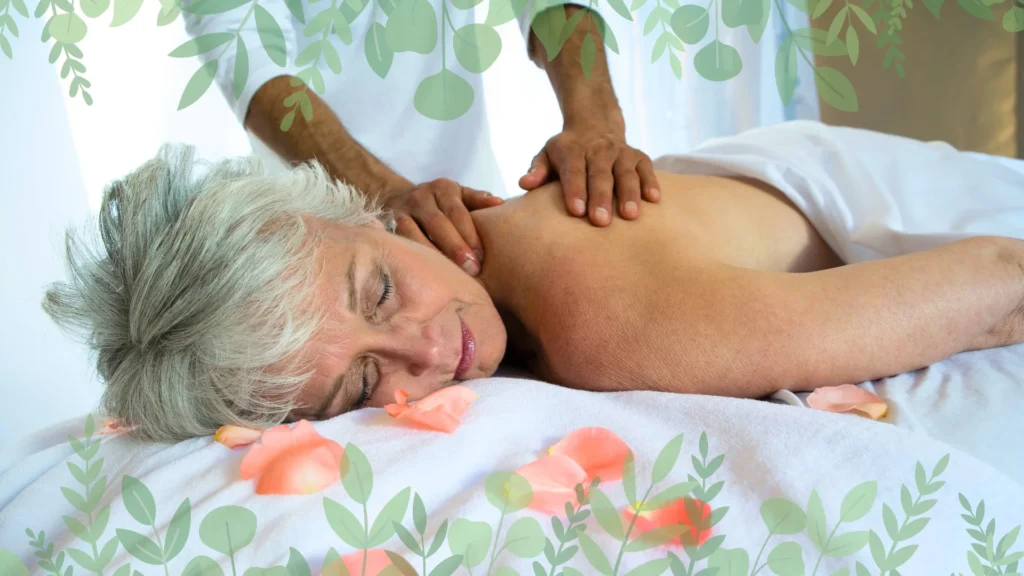
At the same time, people often use hands-on care as a comfort focused option alongside movement.
Massage Therapy’s Supportive Role
Where myofascial release fits
Also, myofascial release (MFR) is a hands-on approach using slow, sustained pressure on connective tissue.
When fascia is irritated, it may feel like a tight web that limits easy motion.
Because of this, MFR sessions often focus on slow sustained pressure rather than deep, fast strokes.
For example, a therapist may hold gentle pressure near the hip or rib area, then wait for softening.
After a session, many people pair it with easy range of motion so the body keeps the new comfort.
If you try self-MFR, start with a ball or foam roller and use light steady contact, not sharp pain.
Safety Considerations & When to Seek Professional Care
When to pause and get checked
Also, avoid aggressive pressure if you bruise easily, use blood thinners, or have fragile skin.
When osteoporosis risk is higher, choose gentler work and skip high-force techniques over the spine.
However, seek medical care for sudden severe pain, new swelling, fever, or unexplained weight loss.
If you have numbness, weakness, or pain that travels down an arm or leg, get assessed soon.
After cancer treatment or with lymphedema risk, ask your care team what type of massage is safest.
Because menopause can overlap with other conditions, a clear diagnosis supports safer, more targeted care.
 Ramon Mascarenas is the owner of PalmLeaf Massage & Wellness. Jen Mascarenas is his wife and a vegan who believes in a whole-food, plant-based diet to promote vitality. She shares vegan recipes and writes abstract research articles for PalmLeaf Massage & Wellness. Ramon Mascarenas and his associates have licensed massage therapists who practice Myofascial Trigger Point Therapy and other medical massage