
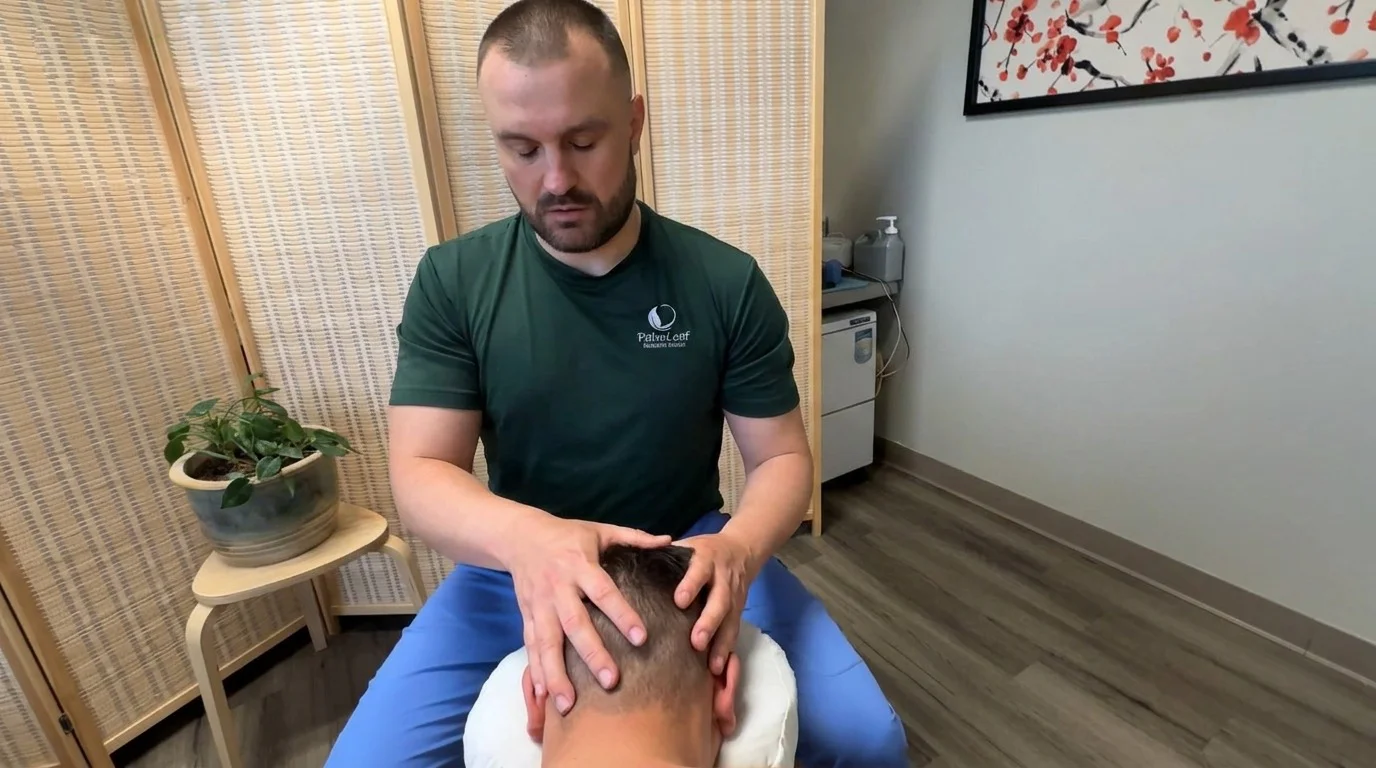
Migraine attacks can disrupt work, sleep, exercise, and everyday plans. If stress or tight neck and shoulder muscles add to your discomfort, massage therapy for migraines may be worth exploring as part of your care plan.
Massage isn’t a cure for migraine, and it shouldn’t replace medical treatment. Still, some people find it useful for easing muscle tension, lowering stress, and supporting relaxation.
Quick Answer
Can massage therapy for migraines help?
Massage therapy may help some people manage muscle tension, stress, and sleep problems linked with migraine. Research is promising, but the evidence is still limited.
Understanding Migraine
Migraine is more than a bad headache. It’s a neurological condition that can cause head pain, nausea, and sensitivity to light, sound, or smells.
A migraine attack may have four phases: prodrome, aura, headache, and postdrome. Not everyone experiences every phase. Prodrome can begin hours or days before head pain and may include fatigue, food cravings, mood changes, or neck stiffness.
Some people also experience aura, such as flashing lights, zigzag patterns, numbness, or changes in speech. The headache phase may last several hours or up to three days. Fatigue and trouble concentrating can continue afterward during postdrome.
How Massage Therapy May Help
Massage therapy works with the body's soft tissues, including muscles around the neck, shoulders, scalp, and upper back. For someone who carries tension in these areas, massage may help the muscles relax.
Stress is another reason some people consider massage. A calm massage session may help lower feelings of tension and make it easier to relax or sleep.
Massage Techniques for Migraine
There isn't one massage technique that suits every person with migraine. Your therapist may adjust the session based on where you feel tension and how sensitive you are to touch.
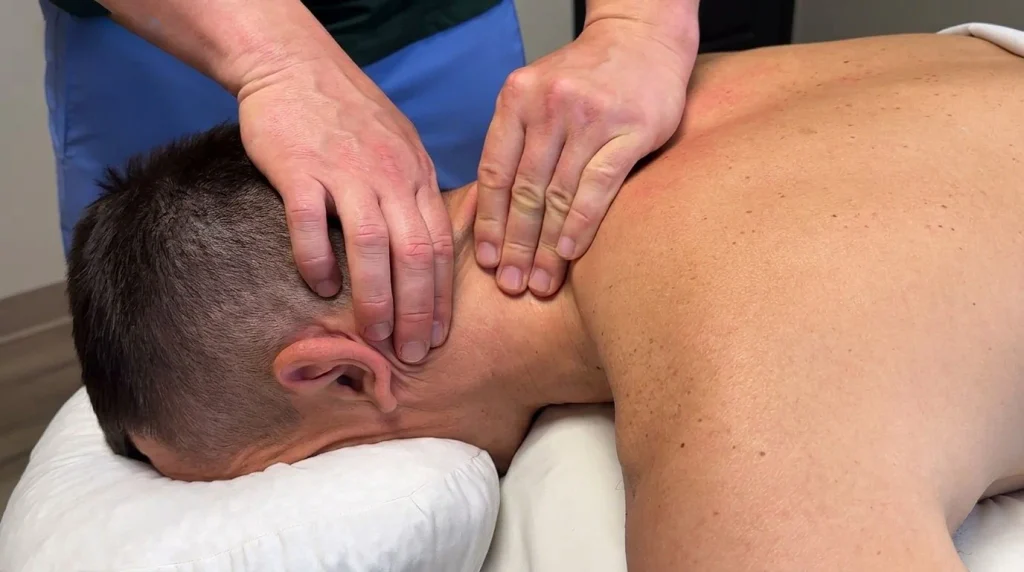
Gentle work around the neck, shoulders, scalp, and upper back may help relax tight muscles. Trigger point or myofascial techniques may also be used to address tender areas.
Deep pressure isn't always better. Migraine can make normal touch feel painful for some people, a symptom called allodynia. If you're sensitive during an attack, lighter pressure or postponing the session may be more comfortable.
What to Expect From Massage
Before your massage, your therapist may ask about your migraine history, current symptoms, medications, and areas of muscle tension. Tell them what usually makes an attack better or worse.
It's also helpful to mention sensitivity to light, sound, scents, temperature, or touch. A quieter room, low lighting, fragrance-free products, or lighter pressure may make the session more comfortable.
During treatment, your therapist may focus on the shoulders, upper back, neck, scalp, or jaw. You should be able to speak up at any time if the pressure feels uncomfortable.
Afterward, you may feel relaxed or notice less muscle tightness. Results vary, so pay attention to how you feel later that day and during the next few days.
Complementary Services
Massage is one option for managing muscle tension and stress around migraine. Some people also explore other supportive services as part of a broader care plan.
Acupuncture
Acupuncture may be used as part of migraine management for some people. It can be worth discussing with a qualified provider, especially if migraines are recurring.
Chiropractic Care
If neck stiffness or restricted movement is part of your symptoms, chiropractic care may help address joint and movement concerns. It should be coordinated with your regular migraine care when appropriate.
At-Home Migraine Self-Care
Gentle self-care can also be useful between massage sessions. If touch feels comfortable, try lightly massaging the temples, scalp, neck, or shoulders rather than pressing hard into sore areas.
You can also support your regular migraine plan by:
- Drinking enough water
- Keeping regular sleep and meal times
- Resting in a quiet, dark room during an attack
- Using a cool pack on the head or neck if it feels soothing
- Keeping a headache diary to notice patterns
These habits won't prevent every migraine attack, but they can help you better understand your symptoms and what supports you.
Is It for You? When to Check First
Talk with your healthcare provider if your migraines are frequent, severe, changing, or haven't been diagnosed. Massage should complement appropriate medical care rather than replace medication or other treatment you've been prescribed.
Seek urgent medical care for a headache that comes on suddenly and reaches severe intensity within about a minute. New weakness, numbness, trouble speaking, major vision changes, fever, or neck stiffness also need prompt medical attention.
If you already have a migraine treatment plan, ask your provider how massage may fit alongside it.
Sources
Headaches: What You Need To Know
National Center for Complementary and Integrative Health
Migraine - Symptoms and causes
Mayo Clinic
What to Know About Allodynia
American Migraine Foundation
Thunderclap headaches - Symptoms and causes
Mayo Clinic
This article is for informational purposes only and is not a substitute for professional medical advice, diagnosis, or treatment. Consult a qualified healthcare provider about your health or medical condition.