
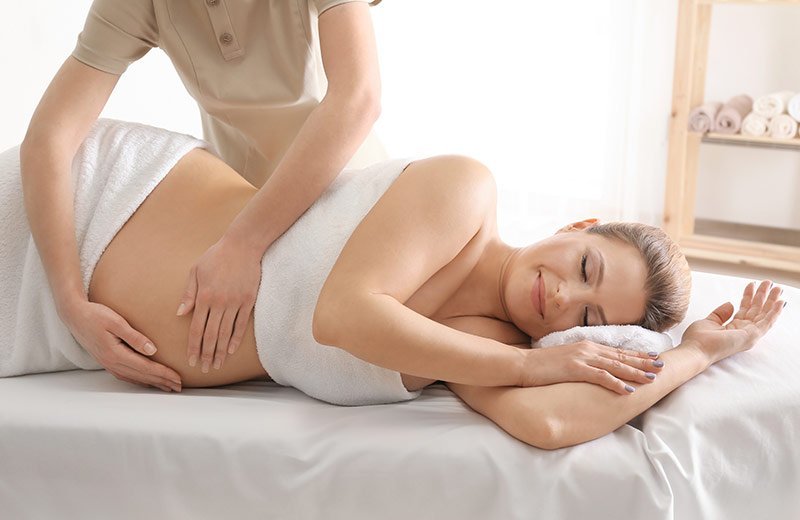
Pregnancy can bring excitement, anticipation, and plenty of physical changes. Prenatal massage in Buffalo Grove, IL may help ease common concerns like back tension, sore hips, tired legs, and stress while giving you time to rest.
At PalmLeaf Massage & Wellness in Buffalo Grove, IL, prenatal massage is adapted to your changing body, comfort level, and stage of pregnancy. It isn’t simply a regular massage with extra pillows. Here’s what to know before scheduling a session.
Quick Answer
Is prenatal massage safe during pregnancy?
For many healthy pregnancies, prenatal massage can be a comfortable form of supportive care. Your therapist should use pregnancy-safe positioning and adjust pressure to your needs.
How Prenatal Massage May Help
Prenatal massage is therapeutic massage adapted for people who are pregnant. A trained massage therapist uses supportive positioning and gentle to moderate pressure. The goal is comfort rather than intense muscle work.
Sessions often focus on areas that work harder during pregnancy. These may include the low back, hips, glutes, shoulders, calves, and feet.
As your center of gravity changes, some muscles work harder to support movement and posture. Massage may help relax these tight or tired areas.
The goal isn’t to “fix” the normal changes of pregnancy. Instead, prenatal massage may help you manage everyday discomfort and feel more at ease.
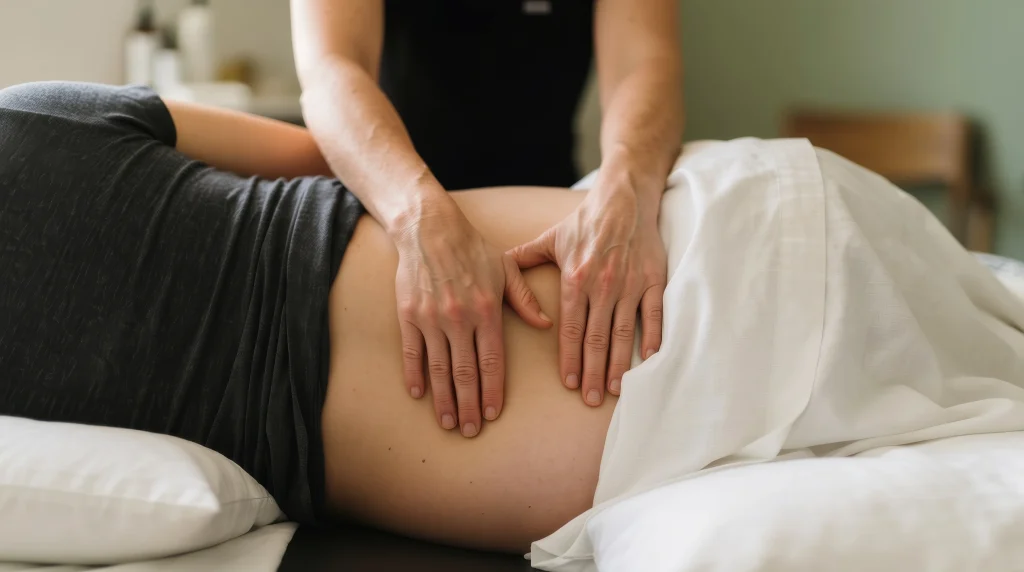
Easing muscle tension
Added weight and changes in posture can put more strain on the low back, hips, pelvis, and legs. Gentle massage may help reduce muscle tightness and make movement feel more comfortable.
Neck and shoulder tension can also build up. This may be especially noticeable if you work at a desk, care for other children, or struggle to find a comfortable sleeping position.
Supporting relaxation and rest
Pregnancy can be physically and mentally tiring. A quiet massage session gives your body a chance to slow down.
Some people find massage helps them feel calmer and more rested. It can be one part of a healthy self-care routine that also includes sleep, gentle movement, hydration, and support from others.
Helping tired legs feel better
Standing or sitting for long periods can leave your legs feeling tired, heavy, or achy. Gentle massage may help ease temporary muscle fatigue and support comfortable circulation.
However, one-sided swelling, redness, warmth, or leg pain needs medical attention. Contact your prenatal care provider before receiving massage if you notice these symptoms.
What to Expect From Prenatal Massage
Before Your Session
Your first visit should begin with a conversation. Your therapist may ask about your due date, areas of discomfort, health history, and any advice from your prenatal care provider.
They should also ask about pressure and positioning. Prenatal massage doesn’t need to hurt to be helpful, so speak up if anything feels uncomfortable.
Positioning and Comfort
Positioning
Most sessions use a side-lying position with pillows or cushions for support. These may be placed under your head, between your knees, or around your abdomen.
A semi-reclined position may also be used depending on your stage of pregnancy and comfort.
Pressure and Techniques
Your therapist may use broad strokes, gentle kneading, and light work around sore muscles. Pressure and techniques should be adjusted for pregnancy and for how you feel that day.
Your Comfort Matters
You should always be able to change positions, take a break, or stop the session.
Professional draping keeps your body covered except for the area being worked on. You can also request changes to the room temperature, music, pillows, pressure, or areas of focus.
Other Services That May Help
Massage isn’t the only option for pregnancy-related discomfort. Depending on your needs and your provider’s advice, other forms of conservative care may also be worth considering.
Gentle acupuncture or pregnancy-informed chiropractic care may help support comfort for some people. These services should be tailored to pregnancy and used as part of a broader care plan, not as a replacement for prenatal medical care.
Is It for You?
When to Check First
For many healthy pregnancies, prenatal massage may be a reasonable comfort-focused option. Still, your health history and current symptoms matter.
Tell your therapist if you have high blood pressure, diabetes, a history of blood clots, bleeding, severe swelling, pregnancy complications, or activity restrictions.
It is also wise to check with your OB-GYN, midwife, or other prenatal provider if your pregnancy is considered high risk or you aren’t sure whether massage is appropriate.
When to Skip Massage
Skip your massage and seek medical guidance if you have vaginal bleeding, fluid leakage, painful regular contractions, chest pain, trouble breathing, severe headache, vision changes, sudden swelling, fever, or decreased fetal movement.
These symptoms need medical assessment rather than a wellness appointment.
I think this is enough. I would not split it into three H3s because the section is already safety-focused, and too many headings would make it feel chopped up.
Sources
Can I get a massage while pregnant?
American College of Obstetricians and Gynecologists
Massage Therapy: What You Need To Know
National Center for Complementary and Integrative Health
Preventing Deep Vein Thrombosis
American College of Obstetricians and Gynecologists
Resources: Urgent Maternal Warning Signs
American College of Obstetricians and Gynecologists
This article is for informational purposes only and is not a substitute for professional medical advice, diagnosis, or treatment. Consult a qualified healthcare provider about your health or medical condition.