
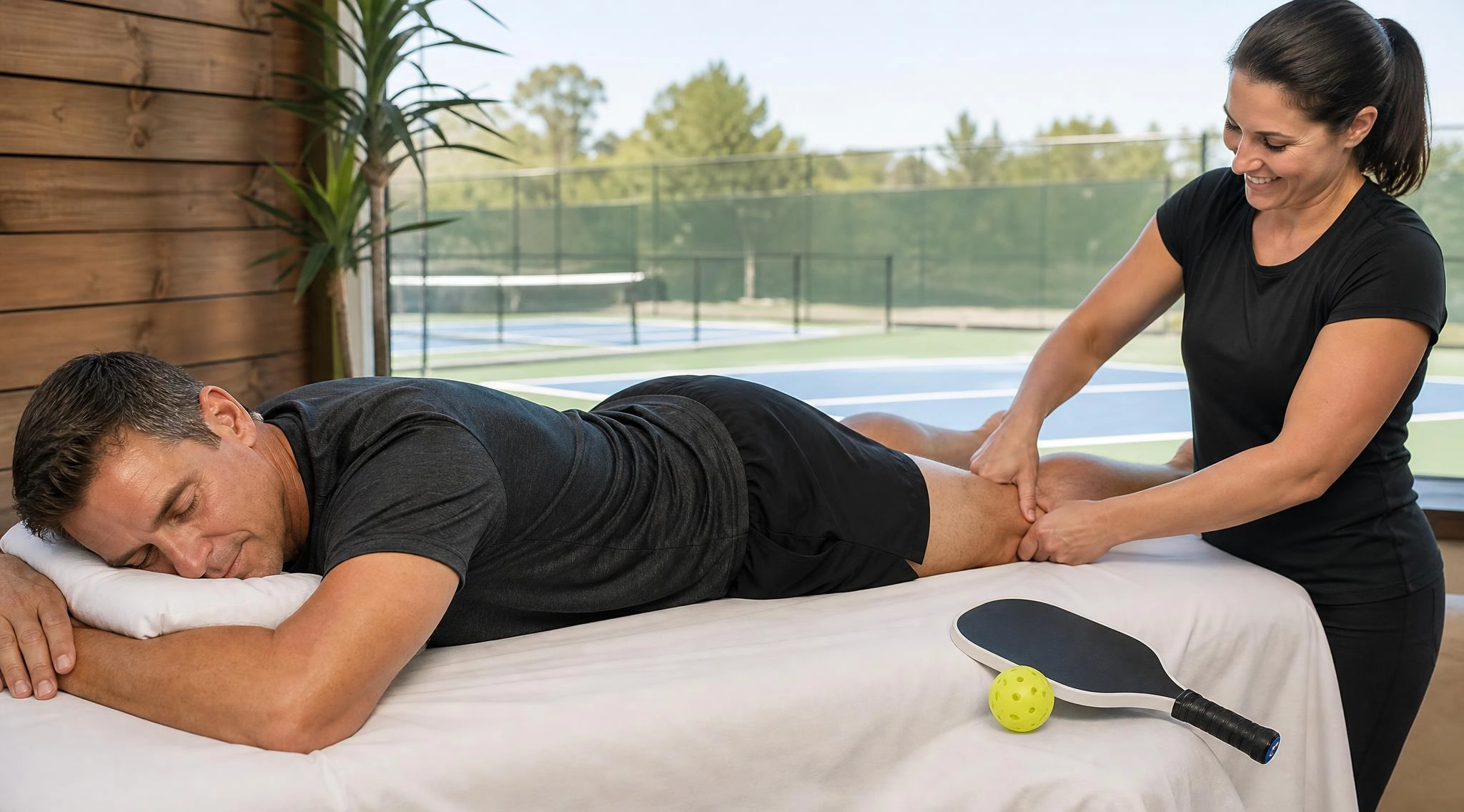
Many Buffalo Grove athletes use massage for pickleball recovery to ease post-game soreness. Quick starts, sudden stops, and fast pivots put real stress on your muscles.
The sport demands agility and quick lateral movement. Without proper recovery care, tight tissue can limit your range of motion and add to your discomfort.
Quick Answer
Can massage help with pickleball recovery?
Yes. Massage may help reduce post-game muscle soreness, tightness, and stiffness while supporting relaxation and easier movement between matches.
How Massage May Help
Pickleball involves repeated lunges, twists, quick stops, and overhead swings. After a hard match, those movements can leave muscles tired, tight, and sore for the next day or two.
Massage may increase blood flow to sore muscles while helping them relax. This can reduce feelings of stiffness and make movement feel easier after play.
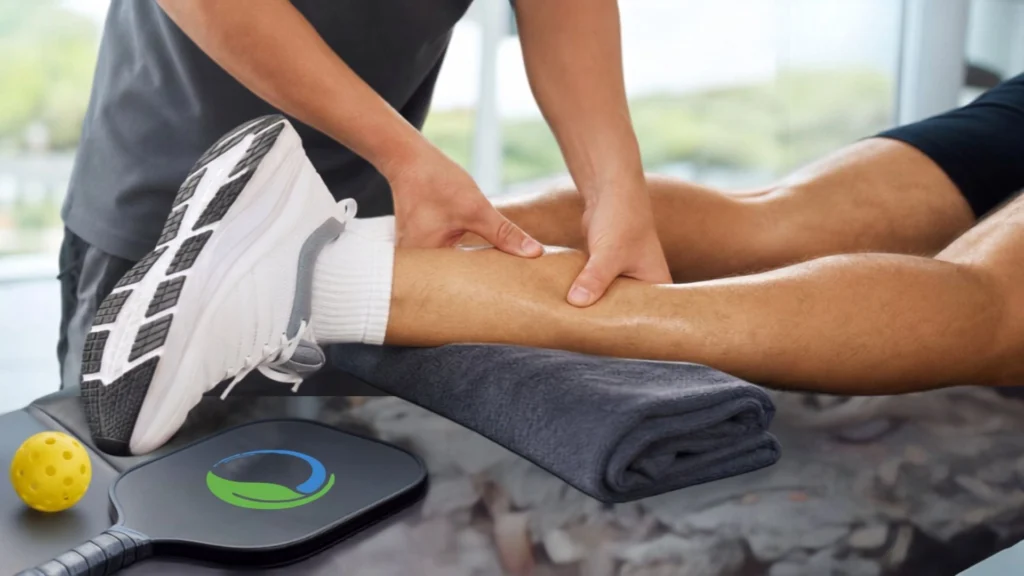
Key Recovery Benefits
Eases muscle soreness. Massage may help relax tight muscles and reduce soreness in areas like the calves, shoulders, and lower back.
Supports easier movement. Loosening tight muscles can help your joints move more freely, which may make it easier to reach, lunge, and pivot during play.
Supports circulation. Massage can increase blood flow to sore muscles, which may help them feel less stiff after a demanding match.
Supports relaxation. A demanding match can leave your body feeling tense and tired. Massage may help you relax and unwind as part of your recovery routine.
What to Expect During Care
Your session usually starts with a short conversation about your recent matches and any tight areas, like your calves, glutes, or swinging arm. From there, your therapist applies firm, controlled pressure using slow strokes to work through stubborn knots.
Some mild discomfort is normal on very tight muscles, but you should always feel safe communicating your needs. Afterward, your muscles may feel warm and slightly tender, and taking it easy for the rest of the day usually helps them settle.
Who It May Help
Good fit for massage:
- Players dealing with sore calves, tight hips, or forearm tension
- Active adults playing multiple competitive matches each week
- Athletes noticing reduced flexibility or stiff joints on the court
- Players managing recurring muscle tightness during a busy playing schedule
When to avoid massage:
- Acute muscle tears or sudden, severe joint pain
- Unexplained swelling or an active skin infection
- A recent bone fracture that still needs medical rest
- Blood-thinning medication without your doctor's approval
Rounding Out Your Recovery Routine
Massage pairs well with a few other habits. Active recovery, like a light walk or swim between hard match days, keeps blood flowing without overloading sore muscles, while passive rest — think warm baths and real sleep — gives your body time to recover.
A few daily habits matter too:
Gentle cool-down — five minutes of light stretching to finish every session
Dynamic warm-up — ten minutes of light cardio and dynamic lunges before you play
Proper hydration — drink fluids before, during, and after longer matches
Post-game nutrition — protein and carbs within an hour of playing to support recovery
Sources
Massage Therapy
Mayo Clinic
Delayed Onset Muscle Soreness (DOMS)
Cleveland Clinic
Muscle Aches
MedlinePlus
This article is for informational purposes only and is not a substitute for professional medical advice, diagnosis, or treatment. Consult a qualified healthcare provider about your health or medical condition.