
A tight spot near your shoulder blade can send discomfort up your neck. Many people ask what trigger point therapy is when a tender area keeps coming back.
Here is how massage can fit in, what a session looks like, and when it makes sense to talk with a doctor first.
Quick Answer
Does Trigger Point Therapy Help?
Trigger point therapy uses targeted pressure on tender muscle spots. It may help reduce muscle tension and improve comfort or movement, although results vary. The pressure should never cause sharp or severe pain.
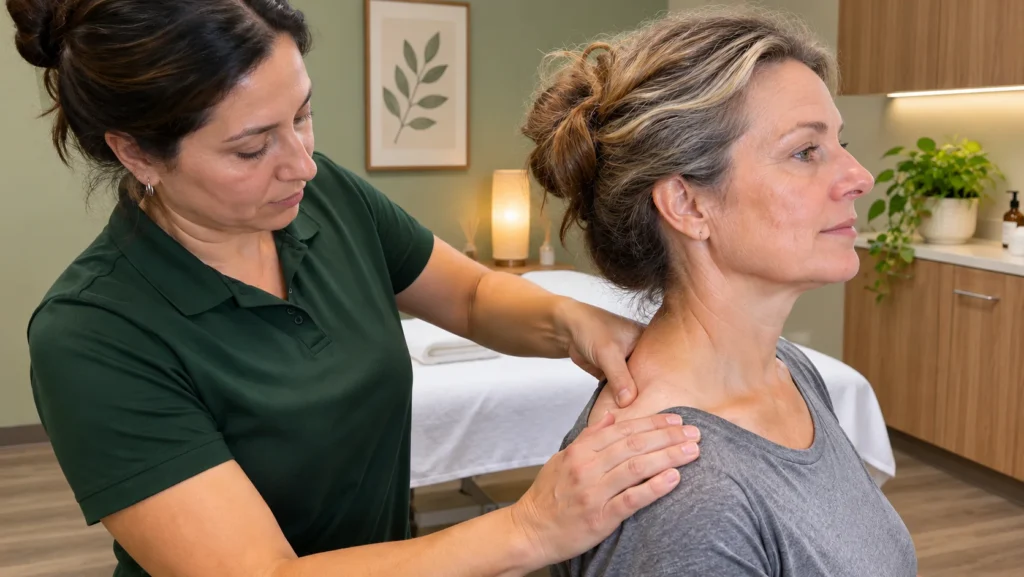
How Trigger Point Therapy May Help
What a Trigger Point Is
"Muscle knot" is an everyday term for a tight, tender spot in a muscle, and some of these spots are called trigger points. Cleveland Clinic describes trigger points as tight, tender areas that may cause pain in another part of the body.
For example, a tight spot in the upper back may be felt as aching in the neck, and these patterns vary from person to person.
Cleveland Clinic lists repetitive activity, intense stress, hunching over a desk, and looking down at a phone as common contributors. Because a knot can feel like a lump, you cannot always tell by touch, so a lump that stays, grows, or looks unusual is a reason to see a doctor.
How Massage May Help
During trigger point therapy, your massage therapist applies steady pressure to a tender muscle spot, then gradually releases it. Depending on the area and your comfort level, they may use fingers, thumbs, elbows, or a specialized tool. Mayo Clinic notes that massage may help ease pain, muscle stiffness, and tension.
Many people feel looser afterward, though relief can be temporary if the daily habits behind the tension continue.
3 Ways Trigger Point Therapy May Help
Eases Tender Spots
Targeted pressure on a sore area may leave it feeling less tight and less sensitive. Very firm pressure is not always better, because it may make a tight muscle tense up instead of relax.
Supports Easier Movement
When a tender spot makes reaching, turning your head, or bending feel stiff, massage may help the surrounding muscle feel looser. Some people find gentle movement easier to keep up once that tightness eases.
Looks at Connected Areas
If one area feels weak, stiff, or painful, nearby muscles often work harder to make up for it. A therapist may work on those overworked muscles too, such as the upper back, chest, and arms when shoulder tension keeps returning.
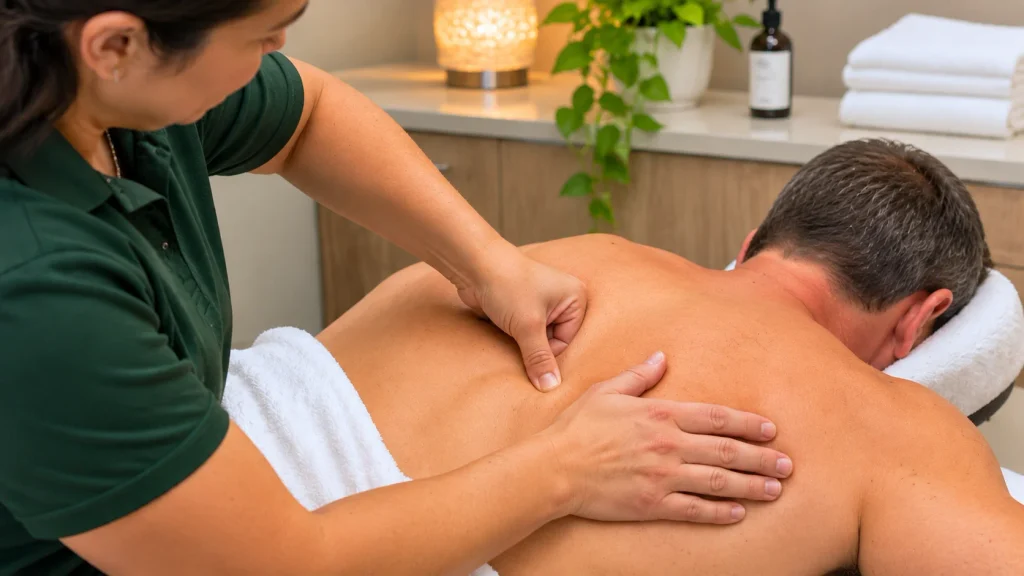
What to Expect During Trigger Point Therapy
Your therapist will usually ask about your symptoms, daily activities, and goals, and you can explain what pressure feels comfortable and speak up at any time. Afterward, you may feel relaxed, loose, or mildly tender.
During the work, you may feel pressure, warmth, or an ache that travels into a nearby area. Between visits, Cleveland Clinic points to habits such as hunching over a desk or looking down at a phone as common triggers. Regular movement breaks and an adjusted screen height may help reduce that strain.
When to Check First
A doctor is the right person to evaluate pain that is new or unusual, because many problems can feel like a muscle knot. Check with a medical provider first if you have:
- Pain that is new, unexplained, or getting worse
- Pain that shoots down an arm or leg, or comes with tingling or numbness
- Pain after a serious fall or accident
- A lump that stays, grows, or looks unusual
- A bleeding disorder, blood-thinning medicine, a recent blood clot, a recent broken bone, a burn, or severe osteoporosis
Mayo Clinic lists bleeding disorders, blood thinners, recent clots, burns, broken bones, and severe osteoporosis as reasons to check with your healthcare team before massage. NCCIH notes that serious problems are rare but advises against using massage to delay seeing a provider. Massage therapists do not diagnose medical conditions or provide medical clearance.
If you're pregnant, ask your pregnancy provider before getting a massage, and choose a therapist trained in prenatal massage, since some techniques and positions may need to change.
Complementary Services
Massage and acupuncture offer different ways to help manage tight, tender muscle spots. Massage uses hands-on techniques to ease muscle tightness, while acupuncture is another option some people choose for persistent muscle tension.
Some people use both services as part of a wellness routine, though neither replaces medical care when an underlying condition needs treatment. At PalmLeaf Massage & Wellness in Buffalo Grove, IL, you can learn more about massage therapy and acupuncture and decide what fits your goals.
Conclusion
Trigger point therapy focuses on specific tender spots, and it may help some people feel looser while their daily patterns change. It is one possible tool rather than an explanation for every ache.
Before your visit, jot down where the discomfort travels and what tends to set it off. That pattern can help your therapist decide where to focus.
FAQs
What does a trigger point feel like?
Many people describe a small, tender spot that can feel like a marble under the skin. Pressing it may cause pain nearby.
Does trigger point therapy hurt?
Mild discomfort can happen, but the pressure should not cause sharp, severe, or worsening pain. Tell your therapist immediately if it does.
How many sessions will I need?
It depends on how long the issue has been present and how your body responds. Your therapist can reassess as you go.
Is it the same as deep tissue massage?
Not exactly. Deep tissue massage uses slower, firmer work over broader areas, while trigger point therapy targets specific tender spots.
Can I use a massage ball at home?
Some people do, using gentle pressure against a wall. Avoid the spine, front of the neck, and joints, and stop if pain increases.
Sources
For Relief, Pull the Trigger on a Trigger Point Massage
Cleveland Clinic
Massage Therapy
Mayo Clinic
Massage Therapy: What You Need To Know
National Center for Complementary and Integrative Health
Considering a Prenatal Massage? Here's What To Know
Cleveland Clinic
This article is for informational purposes only and is not a substitute for professional medical advice, diagnosis, or treatment. Consult a qualified healthcare provider about your health or medical condition.