


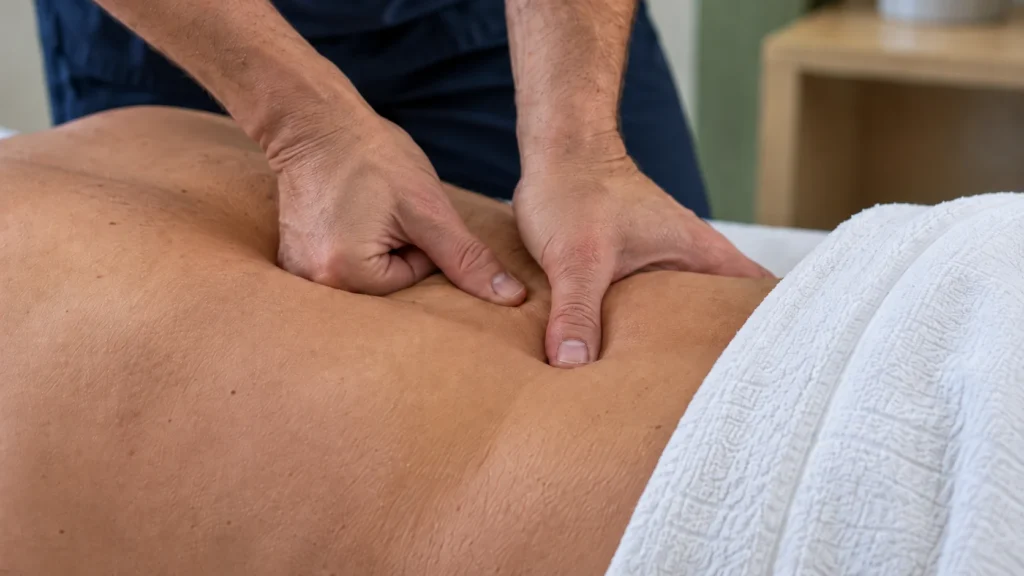
A tight, stubborn spot in your lower back that will not ease with stretching may feel like more than ordinary muscle tension. Small, tender areas often called trigger points can develop in muscles and may add to ongoing aches. Trigger point massage for back pain is one approach some people use to target these sensitive spots and ease muscle tension.
Quick Answer
Can massage help with trigger points in the back?
Massage may help relax tight muscles and reduce tenderness around trigger points. For some people, focused pressure can ease muscle tension and make the area feel more comfortable, at least temporarily.
How Trigger Point Massage May Help
Trigger points are sensitive spots found within tight bands of muscle. They may feel like small knots or tender areas and can hurt when pressure is applied.
Sometimes the discomfort is felt somewhere other than the spot being pressed. This is known as referred pain, and it can make muscle-related back discomfort harder to pinpoint.
Several muscles may be involved in lower back and hip tension. The quadratus lumborum sits deep in the lower back and helps support movement and stability. The gluteus medius, located along the side of the hip, can also become tight or sore.
Another commonly discussed muscle is the piriformis, which sits deep in the buttock near the sciatic nerve. In some cases, irritation around this muscle can be linked with pain, tingling, or numbness that travels into the leg. Piriformis syndrome is considered a relatively uncommon cause of these symptoms.
Massage may be useful when discomfort is mainly related to muscle tension. It is generally better viewed as one part of a broader care plan rather than a treatment for the underlying cause of every type of back pain.
3 Ways Massage May Help
It may ease muscle tension.
Gentle, focused pressure on a tender area may temporarily reduce the feeling of tightness for some people.
It may make movement feel easier.
When a tense muscle relaxes, everyday movements such as walking, bending, or changing positions may feel more comfortable.
It can complement other care.
Massage is often combined with movement, stretching, strengthening exercises, or other treatments instead of being used on its own.
Simple Ways to Ease Back Tension
Gentle movement can be just as important as hands-on treatment. Short walking breaks throughout the day may help break up long periods of sitting and give the lower back and hips a chance to change position.
Regular posture changes can help as well. There is no single perfect sitting position to hold all day. Moving between comfortable positions is often more practical than trying to keep the body rigid.
If you use self-massage tools, start gently. A massage ball, light vibration, or mild pressure may be enough to relax a tense area. Pressing too hard with a foam roller or percussion device can leave the area more sore, especially if it is already irritated.
Avoid putting heavy pressure directly over the spine, bones, or an area with unexplained sharp pain.
You may also find it useful to keep a simple symptom diary. Note when discomfort appears, how long you have been sitting, what activities you did, and which movements seem to help or aggravate it. These patterns can give a physical therapist, massage therapist, or healthcare provider more useful information.
Other Care That May Help
Persistent back discomfort often benefits from looking beyond one tight muscle. Physical therapy may help improve strength, mobility, and movement habits that can contribute to recurring symptoms.
Some people also use acupuncture or massage as complementary approaches. These options may help certain people, but results vary, and they are often used alongside regular movement and appropriate exercise.
If back pain keeps returning or starts interfering with daily activities, consider talking with a healthcare professional. An evaluation can help determine whether muscle tension is the main issue or whether another condition may need different care.
When Back Pain Needs Attention
Many mild episodes of back discomfort improve with time and gentle activity. However, some symptoms should be assessed by a medical professional rather than treated with massage alone.
Seek medical advice if back pain is severe, persistent, or associated with symptoms such as:
- Weakness, numbness, or tingling in one or both legs
- New problems controlling the bladder or bowels
- Fever
- Unexplained weight loss
- Pain that travels down one or both legs, especially below the knee
- Pain after a significant fall, crash, or other injury
- Pain that remains severe even while resting
Sudden loss of bladder or bowel control, severe or worsening leg weakness, or numbness around the groin or inner thighs can require urgent medical attention.
If your symptoms raise concerns, getting evaluated before scheduling a massage is the safer choice.
Conclusion
Trigger points and muscle tension may play a role in some cases of lower back discomfort, and massage can provide temporary relief for certain people. Results vary, so it makes sense to combine hands-on care with regular movement, comfortable posture changes, and exercises suited to your needs.
Most importantly, pay attention to how your symptoms behave. Muscle soreness and tightness may respond well to gentle care, while persistent pain, nerve symptoms, or other warning signs deserve a closer medical look.
FAQs
What does a trigger point in the back feel like?
A trigger point may feel like a tight, tender spot or small knot in a muscle. Pressing the area may cause discomfort locally or sometimes in another nearby area.
How does trigger point massage work for back pain?
Trigger point massage uses focused pressure on tight or sensitive areas of muscle. The goal is to help the muscle relax, reduce tension, and make movement feel more comfortable.
Is trigger point massage supposed to hurt?
You may feel some tenderness when a sensitive area is worked on, but the pressure should remain manageable. Tell your massage therapist if the pressure feels too strong or painful.
How long does it take for a trigger point to release?
There is no set amount of time. Some tight areas may relax during a massage session, while others may need more time, regular movement, stretching, or additional care.
When should you avoid trigger point massage for back pain?
Avoid massage and seek medical advice if back pain is severe, follows a significant injury, or occurs with symptoms such as leg weakness, numbness, fever, or changes in bladder or bowel control.
Sources
Massage Therapy: What You Need To Know
National Center for Complementary and Integrative Health
Piriformis Syndrome: Symptoms, Causes and Treatment
Cleveland Clinic
Taking care of your back at home
MedlinePlus
This article is for informational purposes only and is not a substitute for professional medical advice, diagnosis, or treatment. Consult a qualified healthcare provider about your health or medical condition.