
A long drive or one awkward lift can leave your low back feeling tight and guarded. Deep tissue massage for lower back pain is often used when that discomfort seems tied to muscle tension.
Here is how it can fit in, what a session looks like, and when to talk with a doctor first.
Quick Answer
Can Deep Tissue Massage Help Lower Back Pain?
It may help when back pain comes from muscle tightness, and some people feel looser afterward. Results vary, relief may be temporary, and it does not replace a medical evaluation.
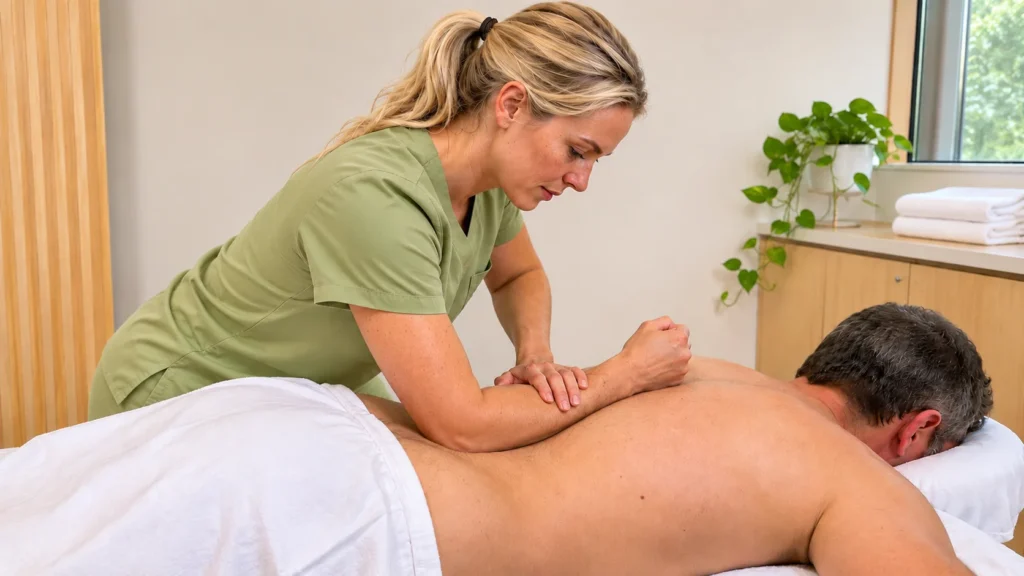
How Deep Tissue Massage for Lower Back Pain May Help
What Deep Tissue Massage Is
Deep tissue massage uses slower strokes and steady, focused pressure to reach deeper layers of muscle and the connective tissue around it. Despite the name, the goal is not to push as hard as possible, but to address tight, sensitive areas while keeping the session safe and tolerable.
How Massage May Help
Massage may help when back pain comes from tight, overworked muscles or repeated postures. Because deeper pressure is not automatically better, a gentler approach may suit you if your muscles are very sensitive, your pain started recently, or you have been protecting the area for weeks.
How Massage Fits Into Lower Back Care
Eases Muscle Tension
Massage may help ease the muscle tension behind a dull ache or stiffness after sitting, and some people feel looser and more comfortable afterward, though relief may be temporary.
Addresses Surrounding Muscles
Lower back pain is rarely about one tight spot, so a therapist may also work on the hips, glutes, and upper legs. These muscles help you sit, bend, and walk, and tightness in them may contribute to strain in the lower back.
Daily Movement Habits
Massage may make movement feel more comfortable, but it does not directly build better movement habits. If you sit for hours, brief walking breaks and regular position changes can reduce the strain of staying in one posture.
Gradual strengthening, gentle stretching, and adequate recovery between strenuous workouts may also help.

What to Expect From a Deep Tissue Massage
A good appointment starts with a conversation, and your therapist should ask where you feel discomfort, what makes it better or worse, and whether the pain travels into the buttock or leg.
You can explain what pressure feels comfortable and speak up at any time. Severe pain is not part of a good session, so sharp or burning pain means the pressure should be modified. Afterward, you may feel relaxed, loose, or mildly tender.
Some soreness the next day can happen, depending on the type of massage. Between visits, notice whether your pain is worse after sitting, lifting, workouts, or poor sleep, and share those patterns with your therapist.
When to Check First
Massage therapists do not diagnose conditions or provide medical clearance, so back pain that is new, severe, or unusual should be checked by a doctor first.
When to Seek Emergency Care
Go to the emergency department immediately, or call 911, if back pain comes with any of these:
- New weakness in both legs
- New difficulty urinating, or new trouble controlling your bladder or bowels
- Numbness in the groin or buttock area
- A fever
- A significant injury, such as a car accident or hard fall
When to Contact a Healthcare Provider
Schedule a medical appointment if your back pain:
- Does not improve with home care, or keeps getting worse
- Spreads down one or both legs, especially below the knee
- Is constant or severe, especially at night
- Comes with unexplained weight loss
Mild, passing leg tightness is different from sudden or worsening leg weakness, numbness, or tingling. Those symptoms need urgent medical assessment.
Precautions Before Booking a Massage
Tell your therapist about your health history before any session.
- Medication: If you take blood-thinning medicine, check with your healthcare provider first.
- Conditions to discuss with your healthcare provider: a bleeding disorder, severe osteoporosis, a recent heart attack, cancer treatment, or a condition that affects sensation or circulation.
- Areas that should not be massaged: broken bones, burns, healing wounds, or areas of nerve damage.
If you suspect a blood clot, postpone massage and seek immediate medical evaluation. If you have a diagnosed blood clot, obtain medical clearance before resuming massage.
Serious complications from massage are rare, but some have involved deep tissue massage or people at higher risk of injury.
Complementary Services
Massage and acupuncture offer different ways to help manage back discomfort. Massage uses hands-on techniques to ease muscle tightness, while acupuncture is another option some people choose.
Some people use both as part of a wellness routine, though neither replaces medical care when an underlying condition needs treatment. At PalmLeaf Massage & Wellness in Buffalo Grove, IL, you can explore massage therapy or acupuncture.
Conclusion
Deep tissue massage may help when back tightness comes from tense muscles, but it works best when the pressure fits your body.
Before your first visit, write down your top one or two goals, and share them with your therapist.
FAQs
Should Deep Tissue Massage for Lower Back Pain Hurt?
Deep tissue massage may involve firm pressure, but it should not cause severe, sharp, or burning pain. Tell your therapist if pressure feels uncomfortable.
Is Deep Tissue Massage Good for All Types of Lower Back Pain?
Not necessarily. Deep tissue massage may help with muscle-related tightness, but some causes of back pain require medical evaluation or a gentler approach.
How Often Should I Get Deep Tissue Massage for Lower Back Pain?
There is no single schedule that works for everyone. Frequency depends on your symptoms, health history, goals, and how your body responds.
Will one session fix my back pain?
Results vary. Relief from one visit may be temporary, so your therapist may suggest other changes, like workstation setup or movement habits.
What should I tell my therapist?
Share where it hurts, what helps or worsens it, your health history, and any medicines. This helps them adjust pressure and avoid sensitive areas.
Sources
Massage therapy
Mayo Clinic
Massage Therapy: What You Need To Know
National Center for Complementary and Integrative Health (NCCIH)
Back pain: Symptom – Causes and definition
Mayo Clinic
Low back pain: When should you see a doctor?
InformedHealth.org (IQWiG)
This article is for informational purposes only and is not a substitute for professional medical advice, diagnosis, or treatment. Consult a qualified healthcare provider about your health or medical condition.