
Corporate wellness programs usually start with gym stipends and step challenges. Massage can be another option, especially for people who spend long days at a desk or on their feet.
Here is how massage can fit in, what a session looks like, and when it makes sense to talk with a doctor first.
Quick Answer
Does Massage Belong in Wellness Programs?
It can. Massage may help ease muscle tension and support relaxation, so it makes a fair addition to a wellness program, as long as it sits alongside supports like flexible schedules and counseling.
How Massage Fits Into Corporate Wellness Programs
What a Corporate Wellness Program Is
A corporate wellness program is a bundle of employer-provided benefits aimed at keeping people healthy at work. The mix varies: one company might offer counseling access and flexible schedules, while another leans on fitness stipends and better chairs. What matters most is whether employees use what is offered, since a long list of unused perks does little for anyone.
Job stress is a big reason these programs exist. The National Institute for Occupational Safety and Health (NIOSH) notes that job stress can lead to poor health and even injury, and it favors the view that working conditions play a primary role in causing it. Massage can’t change a workload, so it works best as one supportive option rather than a fix for a stressful job.
How Massage May Help
Massage therapy involves manipulating the soft tissues of the body, according to the National Center for Complementary and Integrative Health (NCCIH). Mayo Clinic says it may help ease pain and muscle stiffness and support relaxation, though benefits vary depending on the concern.
3 Ways Massage May Help Employee Wellness
Eases Desk Tension
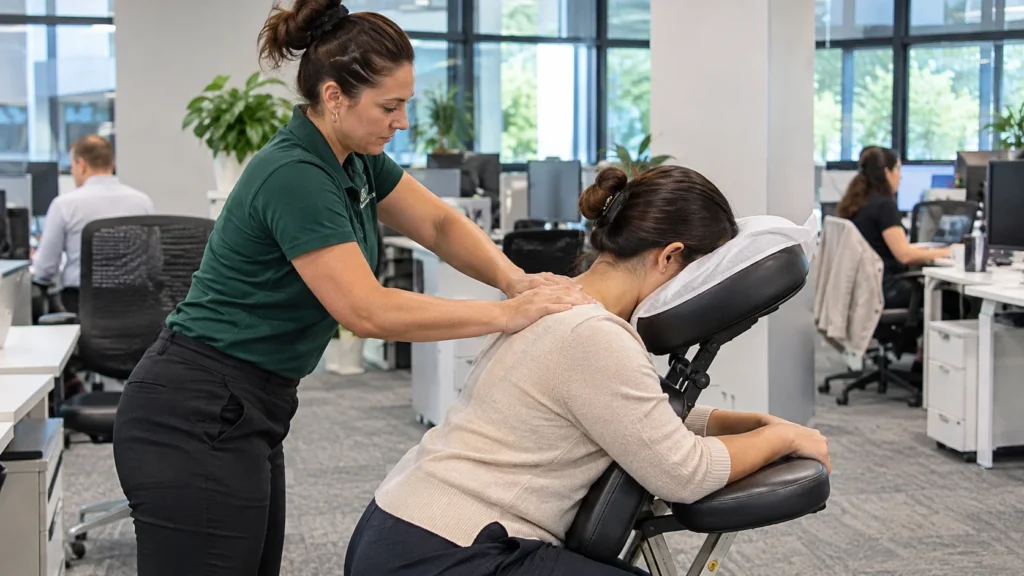
Hours in one position leave many of us with a tight neck and stiff shoulders. Massage may help ease that kind of muscle tension. If changing clothes feels like a hassle, Mayo Clinic notes that chair massage is an option for people who prefer to stay fully clothed.
Supports Stress Relief
Stress tends to pile up over a work week, and plenty of people feel it in their bodies first. Mayo Clinic lists stress reduction and relaxation among massage’s possible benefits. It also notes that some people simply enjoy the comfort and connection that come with a session.
Gives Staff More Choice
Not everyone wants the same thing from a wellness benefit. A fitness stipend suits one person, counseling suits another, and a third simply wants hands-on care. Adding massage, whether through a stipend or a visiting therapist, gives employees one more option they may actually use.

What to Expect From a Massage Session
Your therapist will likely ask about your goals and health history. You can explain what pressure feels comfortable and speak up at any time. Afterward, you may feel relaxed, loose, or mildly tender.
Some soreness the next day is possible, Mayo Clinic says, but severe pain should not happen. Mention allergies or scent sensitivities beforehand, since oil or lotion may be used. And when you are choosing a therapist, Mayo Clinic suggests asking about training, experience, and credentials.
When to Check First
Talk with a doctor first if you have a health condition or aren’t sure massage suits you. Mayo Clinic suggests checking with your healthcare team if you:
- Recently had a heart attack or a blood clot in your leg
- Have a bleeding disorder or take blood-thinning medicine
- Have burns, broken bones, or severe osteoporosis
Pregnancy doesn’t automatically rule massage out. Prenatal massage can be appropriate with your pregnancy provider’s approval and a therapist trained in it, though Cleveland Clinic says providers may not recommend it with concerns like gestational diabetes or high blood pressure, and it advises waiting until after the first trimester.
NCCIH says the risk of harmful effects appears low, with rare serious problems such as blood clots or nerve injury mostly reported after vigorous massage or in people at higher risk of injury. It also cautions against using massage to put off seeing a provider about a medical problem. Massage therapists don’t diagnose conditions or give medical clearance.
Complementary Services
Massage and acupuncture offer different ways to help manage ongoing discomfort. Massage uses hands-on techniques to loosen tight muscles, while acupuncture is another option some people choose.
Some people use both as part of a wellness routine, though neither replaces medical care when an underlying condition needs treatment. PalmLeaf Massage & Wellness in Buffalo Grove, IL, offers both massage therapy and acupuncture.
Conclusion
A wellness program works best when employees can pick supports that fit their own lives, and when employers learn which of those choices people actually use. Massage can be one option in that mix, alongside counseling, flexible schedules, and fitness stipends.
If you are shaping a program in the Buffalo Grove area or anywhere else, a short staff survey asking what people would really use is a simple place to start.
FAQs
Can massage be a wellness benefit?
Yes, employers can offer it through a stipend or a visiting therapist. It works best as one option among several supports.
What is chair massage?
It is a massage option for people who want to stay fully clothed, according to Mayo Clinic. Ask your therapist what areas it covers.
How long is a massage session?
Mayo Clinic says sessions typically last 15 to 90 minutes. Ask your therapist what length fits your goals and schedule.
Should I tell my therapist about my health?
Yes. Share your goals, health history, and allergies, since your therapist uses this to plan the session and oil or lotion may be used.
Is massage painful?
Massage should not cause severe pain. Some tenderness is possible, so tell your therapist if pressure feels too strong.
Sources
Massage therapy
Mayo Clinic
Massage Therapy: What You Need To Know
National Center for Complementary and Integrative Health
Considering a Prenatal Massage? Here’s What To Know
Cleveland Clinic
STRESS…At Work
National Institute for Occupational Safety and Health (NIOSH)
This article is for informational purposes only and is not a substitute for professional medical advice, diagnosis, or treatment. Consult a qualified healthcare provider about your health or medical condition.