
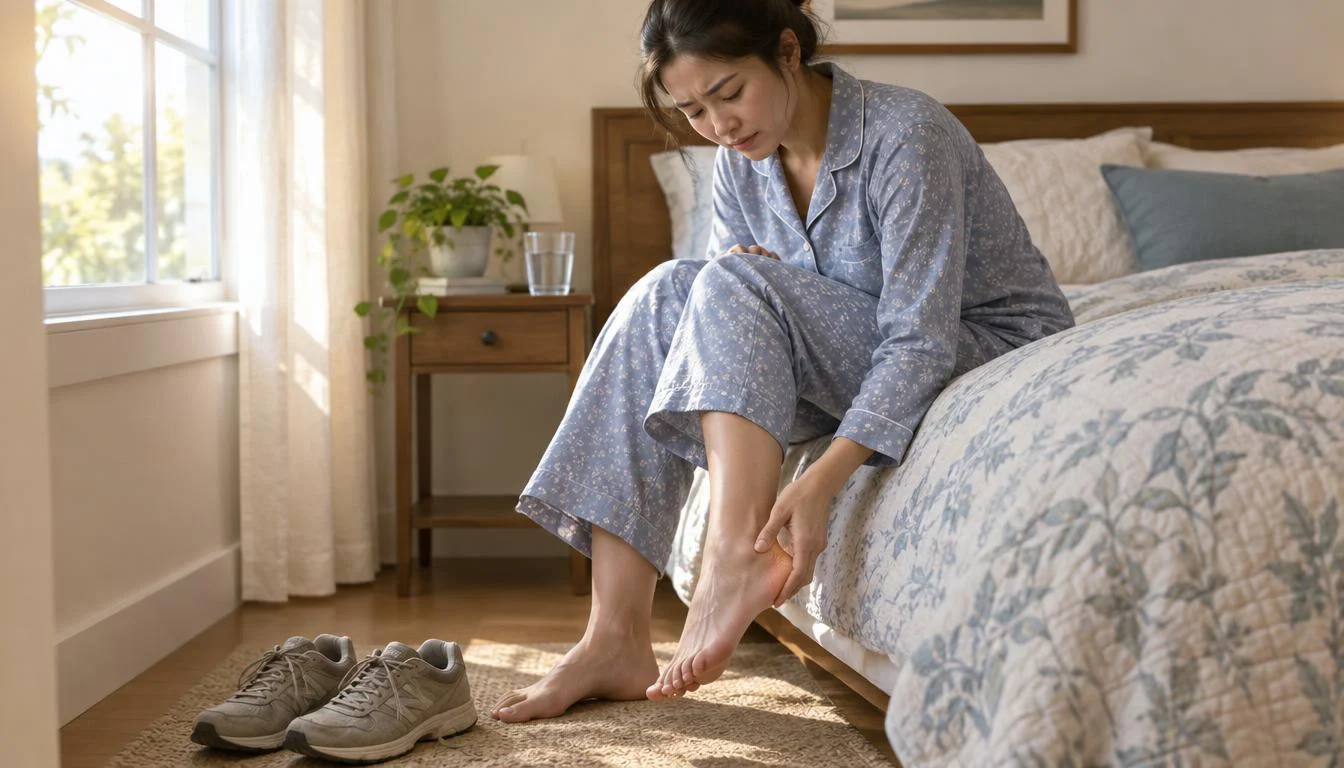
Sharp heel pain with your first steps out of bed is a classic sign of plantar fasciitis. Massage for plantar fasciitis may help your foot and calf feel looser, though it generally works best as one part of a broader care plan.
Below, we cover causes, how massage may help, and when to check with a doctor first.
Quick Answer
Can Massage Help Plantar Fasciitis?
Massage may help the foot and calf feel looser and less tender for some people. Results vary, and it may fit best alongside stretching, supportive shoes, and a doctor's guidance.
How Massage for Plantar Fasciitis May Help
What a Plantar Fascia Is
Plantar fasciitis happens when the plantar fascia, the thick band of tissue along the bottom of the foot that connects your heel bone to your toes, becomes irritated or inflamed. Mayo Clinic describes a sharp, stabbing pain near the heel that is often worst with the first steps in the morning.
The exact cause varies from person to person, and foot shape, worn-out shoes, extra body weight, and a sudden change in activity can all contribute. Mayo Clinic also notes that teachers, factory workers, and others who spend long hours on their feet on hard surfaces face a higher risk.
How Massage May Help
A therapist may work the foot, the arch, and the calf, because MedlinePlus lists a tight Achilles tendon, the tendon that connects the calf muscles to the heel, among the factors linked to this condition. Pressure should stay comfortable, since a sore heel does not need to be pushed hard. Many people describe the foot feeling looser afterward, though relief can be temporary if the daily strain continues.
3 Ways Massage May Help Plantar Fasciitis
Eases Tender Spots
Gentle, steady pressure along the arch and heel may leave sore areas feeling less sensitive, and your therapist adjusts the pressure as you go, though sharp pain is always a cue to speak up immediately.
Loosens the Calf
Because the calf and Achilles tendon connect to the heel, working the lower leg may help the entire area feel less tight. Some people discover that the most persistent tension sits higher up the leg than the heel itself.
Supports Daily Comfort
When the foot feels looser, the first steps of the morning and extended periods of standing may feel more manageable for some people. That comfort can make it easier to keep up with the stretching and supportive shoes that MedlinePlus lists among the first steps providers recommend.
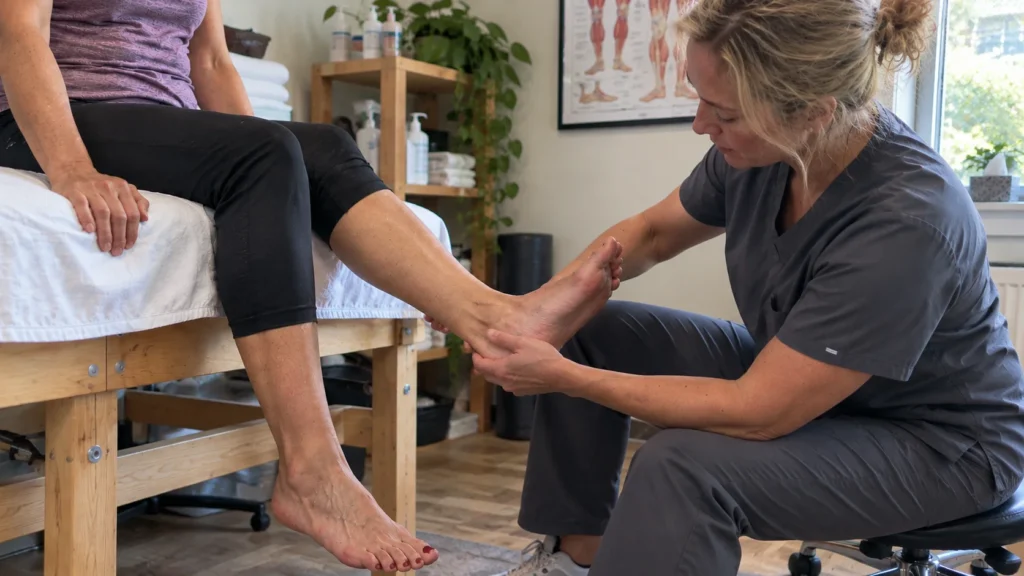
What to Expect From a Plantar Fasciitis Massage
Your therapist will ask where the pain shows up and when it feels worst. You can explain what pressure feels comfortable and speak up at any time during the session. Afterward, you may feel relaxed, loose, or mildly tender.
Habits between visits still matter, and NHS guidance suggests wearing cushioned heels with good arch support while avoiding flip-flops and barefoot walking on hard surfaces. Foot sensitivity varies considerably from day to day, so lighter pressure is always an option.
When to Check First
A doctor is the right person to evaluate heel pain, particularly when something seems unusual or the symptoms are changing. Check with a medical provider first if you notice:
- Severe pain, or pain that stops you from doing normal activities
- Pain that is getting worse or keeps coming back
- No improvement after about 2 weeks of caring for it yourself
- Tingling or loss of feeling in the foot
- Diabetes along with foot pain
NHS guidance lists each of these as a reason to see a doctor, and massage therapists do not diagnose medical conditions or provide medical clearance.
Complementary Services
Massage and acupuncture offer different ways to help manage heel and foot discomfort. Massage uses hands-on techniques to ease muscle tightness, while acupuncture is another option some people choose when foot pain keeps returning.
Some people use both services as part of a regular wellness routine, though neither replaces medical care when an underlying condition needs treatment. Tell any practitioner about your health conditions and medications before your first appointment.
Conclusion
Heel pain from plantar fasciitis often reflects a combination of foot shape, footwear, and daily time on your feet, and massage may help the foot and calf feel looser while you work on those patterns.
Before your visit, notice whether the pain is sharpest with the first steps of the day or after long periods of standing, because sharing that pattern helps your therapist tailor the session.
FAQs
Is massage good for plantar fasciitis?
It may help the foot and calf feel looser for some people. Results vary, so it may fit best alongside other care.
Should massage hurt with plantar fasciitis?
Pressure should stay comfortable. Tell your therapist right away if it turns sharp, since a sore heel does not need forceful pressure.
Why does my heel hurt in the morning?
Plantar fasciitis often causes sharp heel pain with the first steps of the day. A doctor can confirm the cause.
Which shoes help plantar fasciitis?
Shoes with cushioned heels and good arch support are commonly advised. Flip-flops, high heels, and backless slippers are best avoided.
How long does plantar fasciitis last?
Most people feel better with nonsurgical care, though MedlinePlus notes recovery can take several months to 2 years.
Sources
Plantar Fasciitis: Symptoms and Causes
Mayo Clinic
This article is for informational purposes only and is not a substitute for professional medical advice, diagnosis, or treatment. Consult a qualified healthcare provider about your health or medical condition.