
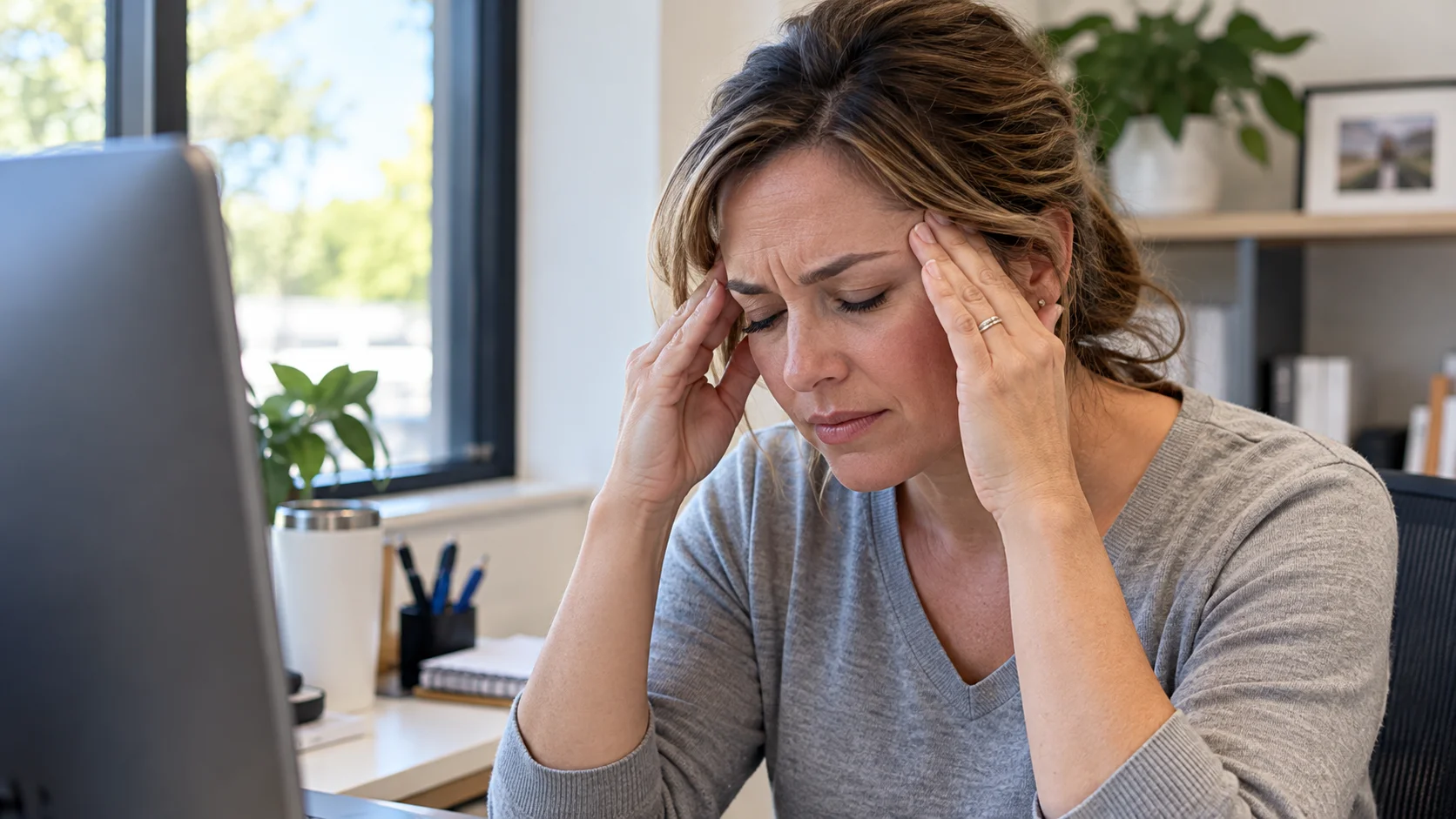
That dull, squeezing ache across your forehead can show up after a long day at a screen or a night of poor sleep. If you're wondering whether massage for tension headaches is worth trying, this post explains what these headaches feel like, how a session may help, and when to check with a doctor first.
Quick Answer
Can Massage Help Tension Headaches?
Massage may help you relax and ease tight neck, shoulder, and scalp muscles, which many people find comforting. It doesn't replace medical care, and results vary from person to person.
How Massage for Tension Headaches May Help
A tension headache usually feels like a dull, steady ache or a tight band around the head, and Mayo Clinic notes that it can come with tenderness in the scalp, neck, and shoulder muscles.
The exact cause isn't fully clear, but stress is the most commonly reported trigger, while MedlinePlus lists too much work, too little sleep, and skipped meals as other risk factors.
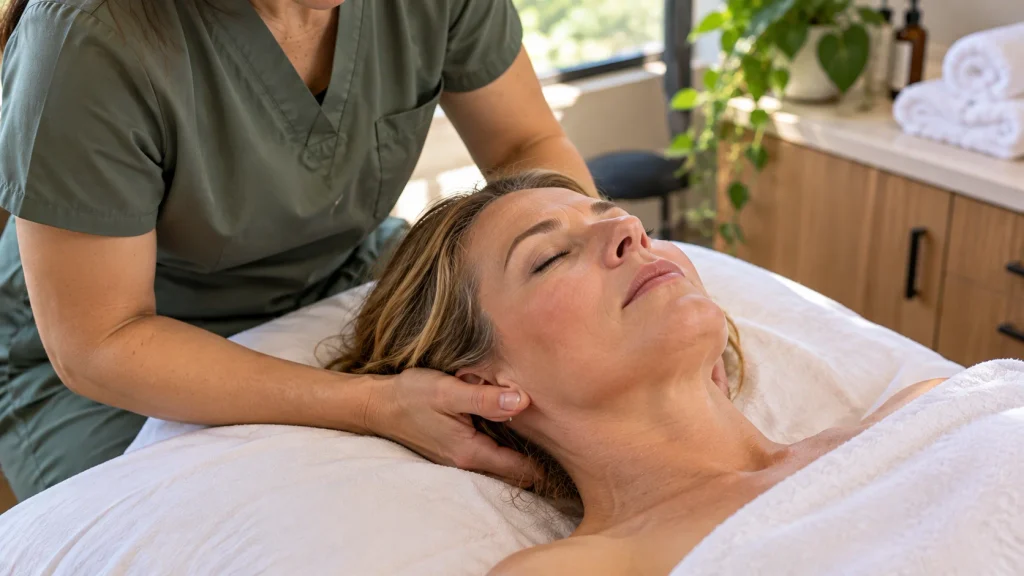
Massage focuses on the areas that tend to feel tight, including the neck, shoulders, scalp, and jaw. A therapist uses slow, steady strokes and gentle pressure, so a session can feel like a calm break as much as a physical treatment.
Some people feel less tension in their neck and shoulders afterward, while others simply enjoy a quiet break from a busy week.
3 Ways Massage May Help
Looser Neck and Shoulders
Many headaches come with tender, tight muscles through the upper back and neck, and massage works directly on these spots, so some people feel noticeably less achy afterward.
A Calmer Body
Since stress is a common trigger, a slow, quiet session may help you unwind and settle your breathing. Many people leave feeling calmer and more rested than when they arrived.
Awareness of Your Habits
You may notice a jaw that clenches or shoulders that creep toward your ears during a session. Knowing these patterns can help you adjust your desk setup, posture, and break times throughout the day.
What to Expect
Your therapist will usually ask where you feel tension and how much pressure you prefer. During a headache, lighter pressure is often more comfortable than deep work, so speak up right away if anything feels too strong.
If bright lights or loud sounds bother you, ask for a dimmer, quieter room. The NHS also suggests heat or cold packs for neck pain that comes with headaches, and some people find them soothing between visits.
Afterward, you may feel relaxed, loose, or a little tender, and everyone responds differently. Tell your therapist how you feel as the session goes so they can adjust.
When to Check First
Massage therapists don't diagnose headaches or clear anyone medically, so talk with a doctor first if:
- You need pain medicine often, or the headaches regularly disrupt your daily life.
- Your usual headache pattern changes, or a headache suddenly feels very different from the others.
- Headaches come with throbbing pain, nausea, or sensitivity to light or noise.
Get emergency help for a sudden, very bad headache or a headache after a head injury. Mayo Clinic also lists fever, stiff neck, confusion, double vision, weakness, numbness, and trouble speaking as reasons to seek help right away.
Complementary Services
Massage and acupuncture work in different ways, so some people use them side by side. Massage uses the hands on muscles and soft tissue, while acupuncture places thin needles at specific points on the body.
Mayo Clinic lists tension headaches among the reasons people try acupuncture, and notes it is also used for stress management. A typical treatment uses roughly 5 to 20 needles, and insertion usually causes little discomfort beyond a mild ache.
Acupuncture is considered low risk with a certified practitioner who uses sterile, single-use needles, though soreness or minor bruising at the needle sites can happen. It isn't right for everyone, so tell your practitioner if you have a pacemaker or are pregnant.
Neither one replaces a medical evaluation, so a doctor is the right next step if headaches keep returning. Mayo Clinic also suggests telling your doctor when you're considering acupuncture.
Conclusion
Tension headaches are common. The tight, achy feeling often has more than one trigger. Massage may be a comforting part of your routine, along with regular meals, consistent sleep, and other ways to relax.
A simple note can help you spot patterns, so jot down the time, what you ate, how you slept, and what stress you faced, then share it with your doctor if the headaches continue.
FAQs
Does massage help tension headaches?
Many people feel more relaxed and less tight in the neck and shoulders afterward, although results vary, and massage supports your routine without replacing medical care.
What does a tension headache feel like?
It's often a dull, steady ache or a tight band around the head, and Mayo Clinic notes that it doesn't usually bring nausea or vomiting the way a migraine can.
What triggers these headaches?
Stress is the most commonly reported trigger. Poor sleep, skipped meals, and too much work can also play a part for some people.
Is massage okay during a headache?
Many people prefer light pressure and a quiet room during a headache, so tell your therapist how you feel, and they can adjust.
When should I see a doctor about headaches?
See a doctor if headaches are frequent, disrupt daily life, or change in pattern. Get emergency help for a sudden, very bad headache.
Sources
This article is for informational purposes only and is not a substitute for professional medical advice, diagnosis, or treatment. Consult a qualified healthcare provider about your health or medical condition.