


A stiff neck after every workday, soreness between the shoulder blades, or a tight hip during walks may feel like a stubborn muscle “knot.” But the sore spot may not be the whole problem. The tissue around the muscles can also become tight and sensitive.
Myofascial release is a hands-on technique that works with these tight areas. Often used during therapeutic massage, it may help ease muscle tension and improve comfortable movement.
Quick Answer
Does myofascial release hurt?
It can feel intense in a tight spot, but it should stay manageable and never sharp or unbearable.
What Is Myofascial Release?
Fascia is a thin layer of connective tissue found throughout the body. It surrounds and supports muscles, nerves, bones, and organs. It also helps different parts of the body move together.
Muscles and nearby tissues can feel tight after long periods of sitting, repeated movements, hard exercise, stress, or injury. Over time, this tension may make certain movements feel stiff or uncomfortable.
Myofascial release uses gentle, steady pressure and slow stretching on areas that feel restricted. Instead of rubbing the area quickly, a massage therapist may hold pressure for a short time and allow the tissue to relax.
People may try myofascial release massage for ongoing muscle tension, stiffness, limited movement, or soreness after exercise. It may also be used for tension linked to long hours at a desk or repeated physical activity.
Results are different for everyone. Some people notice less tightness and find that everyday movement feels easier after a session.
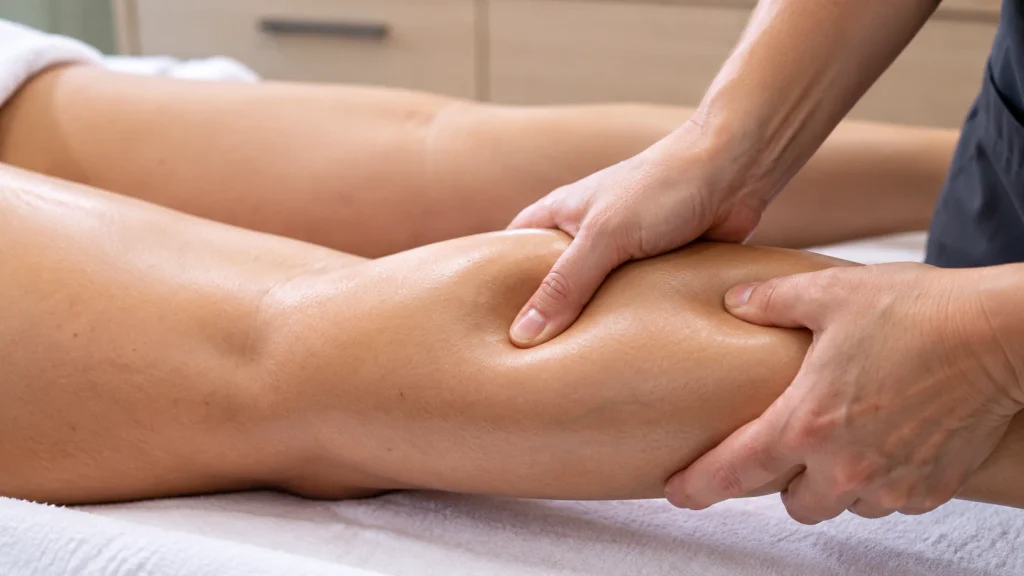
What Does Myofascial Release Feel Like?
Myofascial release should not feel like a test of how much pain you can handle. Pressure on a tight area can feel strong, but it should stay within a comfortable range.
Speak up if you feel sharp pain, numbness, tingling, or pressure that makes you tense your body. Deeper pressure is not always better.
A session may focus on your neck and shoulders, lower back, hips, legs, or another problem area. Your massage therapist may also work on muscles and tissues near the place where you feel discomfort.
This is because one area of the body can affect how another area moves. For example, tight hips and thighs may add strain to the lower back. Tension across the chest and shoulders may also affect neck movement.
After myofascial release, you may feel more relaxed or notice that movement feels easier. Some mild tenderness can happen, especially when an area was already sensitive.
When May Myofascial Release Help?
Myofascial release may be useful when stiffness or discomfort seems linked to tight muscles, repeated activity, or reduced movement.
Someone who works at a computer all day may develop tension in the neck and shoulders. An active person may feel tight after a hard workout. Long drives, physical work, or changes in your normal routine can also leave muscles feeling stiff.
Myofascial release may be one part of a care plan for ongoing muscle and body discomfort. However, it cannot treat every cause of pain.
Pain can sometimes come from a joint problem, irritated nerve, or injury that needs medical care. Massage should not be used in place of a medical exam when symptoms are serious or do not improve.
Seek medical care if severe pain starts after a fall or accident, causes weakness, or comes with unexplained swelling or fever. Loss of bladder or bowel control also needs urgent medical attention.
How to Support Your Results Between Sessions
What you do between massage sessions can make a difference. Small daily habits may help reduce some of the strain that causes muscle tension to return.
If you spend hours at a computer, change positions throughout the day. You do not need to hold one “perfect” posture for hours. Short movement breaks can help your muscles and joints move instead of staying in the same position.
Gentle stretches or mobility exercises may also help as long as they do not increase your pain. In some cases, strengthening, rest, or changes to your daily activities may be more useful than stretching alone.
Heat often feels soothing on tight or tired muscles. A cool pack may feel better after hard activity or a recent flare-up. Which one feels best can depend on your symptoms and what caused them.
Your massage therapist can also suggest simple ways to support your comfort between visits.
Complementary Services
Myofascial release can be part of a broader approach when muscle tension, stiffness, or discomfort affects your daily activities. Depending on what is causing your symptoms, other services may also provide support.
Chiropractic Care
When stiffness involves both muscles and joint movement, chiropractic care may be another option. A chiropractor can assess how your joints are moving and look for areas where restricted movement may be contributing to discomfort.
Massage and myofascial release focus more on muscles and soft tissues, while chiropractic care focuses on the joints and how the body moves. For some people, using both approaches may help address different parts of the same problem.
Acupuncture
Acupuncture may also be used as a complementary approach for certain types of muscle tension and ongoing pain. Treatment involves placing very thin needles at specific points based on your symptoms and individual needs.
Some people choose acupuncture along with massage when tension keeps returning or when they want another approach to managing discomfort.
Fire Cupping
Fire cupping may also be used to support areas of muscle tightness and soreness. During treatment, cups create gentle suction on the skin rather than applying downward pressure like massage.
This different approach may feel helpful for people with tired or tight muscles, especially when combined with other hands-on therapies.
Therapeutic Massage
Myofascial release does not always need to be a stand-alone treatment. Your massage therapist may combine it with other therapeutic massage techniques during the same session.
For example, a therapist may use myofascial release on a particularly tight area and then use other massage techniques on the surrounding muscles. The session can be adjusted based on where you feel tension, how much pressure is comfortable, and how your body responds.
At PalmLeaf Massage & Wellness, these services can be considered individually or as part of a personalized approach. The right combination depends on your symptoms, goals, health history, and comfort level.
Finding the Right Approach
Muscle tension can build slowly from work, exercise, stress, or everyday habits. Myofascial release may help ease tight areas and make movement feel more comfortable, especially when it is matched to your needs and comfort level.
At PalmLeaf Massage & Wellness, your therapist can adjust the pressure and techniques based on how your body responds. The goal is not to push through pain, but to help you feel looser, more comfortable, and better able to move.
If muscle tension keeps getting in the way of your day, consider scheduling a therapeutic massage to see whether myofascial release may be a good fit for you.
Sources
Myofascial Release Therapy
Cleveland Clinic
Massage Therapy: What You Need To Know
National Center for Complementary and Integrative Health (NCCIH)
Low back pain - acute
MedlinePlus
Muscle cramp - Diagnosis and treatment
Mayo Clinic
This article is for informational purposes only and is not a substitute for professional medical advice, diagnosis, or treatment. Consult a qualified healthcare provider about your health or medical condition.