

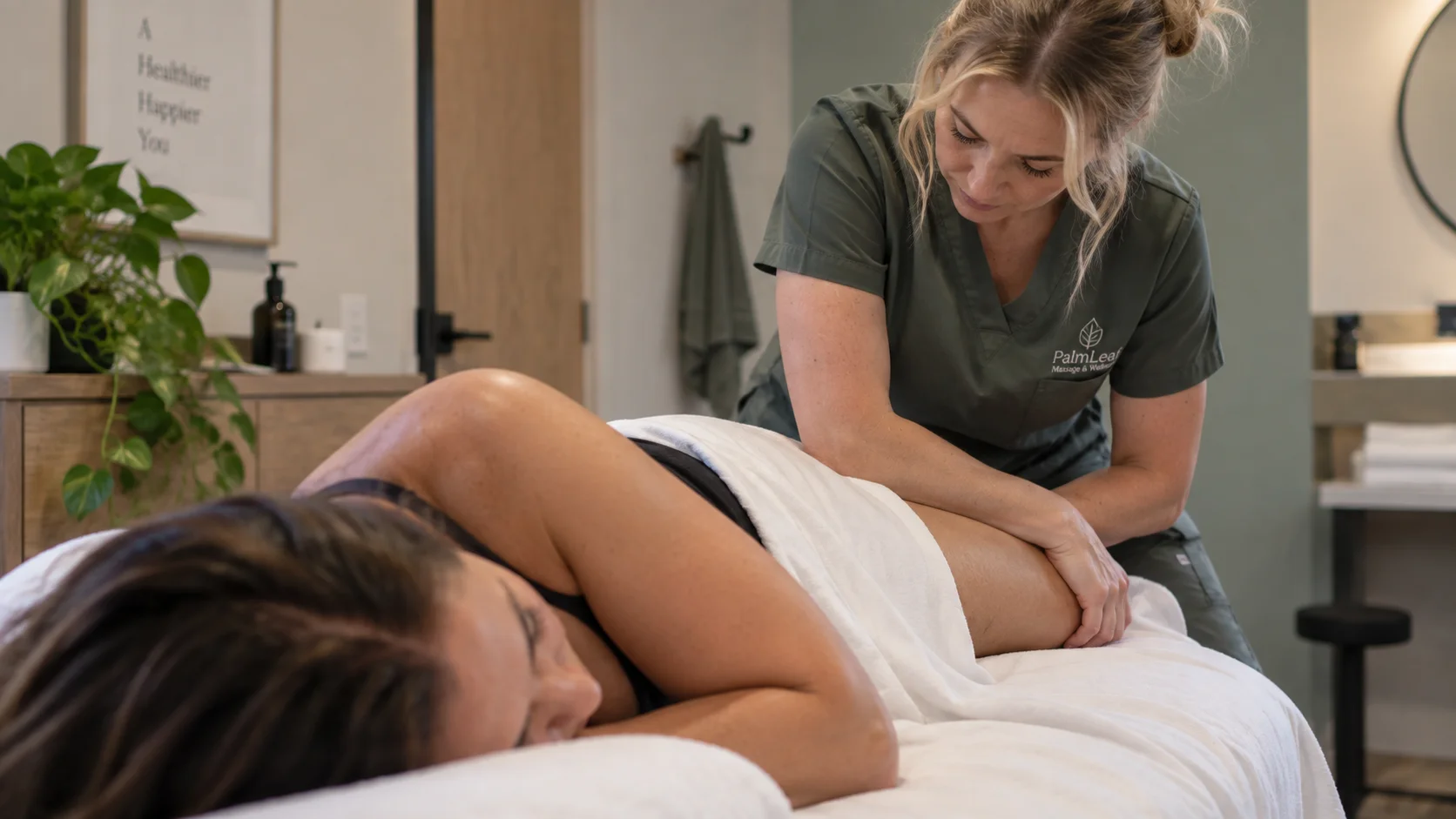
A stiff neck after a long workday, a tight lower back after lifting, or sore legs after training can make everyday movement harder. The benefits of deep tissue massage may be especially helpful when muscle tension keeps coming back or never seems to fully settle.
Despite the name, deep tissue massage isn’t about using as much pressure as possible. It’s a focused approach that works slowly through deeper muscle and connective tissue. The pressure should always be adjusted to your comfort, needs, and goals.
Quick Answer
What are the benefits of deep tissue massage?
Deep tissue massage may ease ongoing muscle tension, support better movement, reduce exercise-related soreness, and encourage relaxation. The right pressure and approach will depend on your needs.
What Is Deep Tissue Massage?
Deep tissue massage often focuses on areas of long-term tightness, soreness, or limited movement. A massage therapist may use slow strokes, firm pressure, and targeted techniques on areas such as the shoulders, hips, calves, neck, or lower back.
A deep tissue session shouldn’t feel like something you have to endure. Some tenderness or strong pressure can be normal, but sharp pain or numbness is a sign to speak up. You should also tell your therapist if the pressure makes you tense or hold your breath.
Good communication matters throughout the session. Your therapist can adjust the pressure as needed, helping the treatment stay comfortable while still focusing on areas that need attention.
Benefits of Deep Tissue Massage
People often choose deep tissue massage when muscle tension keeps returning. Repetitive work, exercise, stress, and past injuries can all leave certain muscles feeling tight, tired, or sore.
May Ease Ongoing Muscle Discomfort
Deep tissue massage may reduce the feeling of knots, tight bands, and soreness in overworked muscles. Someone who spends hours at a desk, for example, may notice tension through the neck and upper back. A runner may feel similar tightness through the calves, hips, or hamstrings.
Massage doesn’t diagnose or cure the cause of pain. Still, it may be a useful part of a broader plan for common muscle discomfort, along with regular movement, appropriate exercise, and better work or posture habits.
If pain keeps returning or starts affecting normal activities, it’s worth talking with a healthcare professional. There may be an underlying issue that needs more than massage.
May Help You Move More Easily
Tight muscles and connective tissue can make normal movements feel restricted. Turning your head, reaching overhead, squatting, or getting out of a car may feel uncomfortable when the surrounding tissues are tense.
By working on areas of tension, deep tissue massage may help some people move more comfortably. The goal isn’t to force a muscle to loosen. Instead, your therapist works within a level of pressure your body can tolerate.
Massage may feel helpful on its own, but lasting changes often involve other habits too. Stretching, strengthening, and regular movement can all play a role, depending on what is causing the tightness.
May Help With Exercise Recovery
Active adults often use massage between workouts to manage soreness and stiffness. Deep tissue massage may be useful when certain muscle groups are repeatedly stressed through running, lifting, cycling, or other activities.
Timing matters, though. Very deep work immediately before a demanding workout or event may leave some people feeling tender. In that situation, lighter pressure may be a better choice.
Tell your therapist what your training week looks like and which areas tend to get sore. They can adjust the pressure and timing of your session around your activity level.
Massage can support recovery, but it doesn’t replace rest, sleep, hydration, or sensible training. Those basics still matter when your body is recovering from exercise.
Can Encourage Relaxation
Deep tissue massage is usually more focused than a traditional relaxation massage, but the experience can still be calming. When tight muscles begin to feel less guarded, some people find it easier to relax and move without as much strain.
Stress can also add to muscle tension, especially around the jaw, neck, shoulders, and upper back. Massage may help you manage some of that physical tension while giving your body time to slow down.
For the best results, think of massage as one part of a healthy routine. Regular movement, enough sleep, and time to recover from stressful days can all support how you feel between sessions.
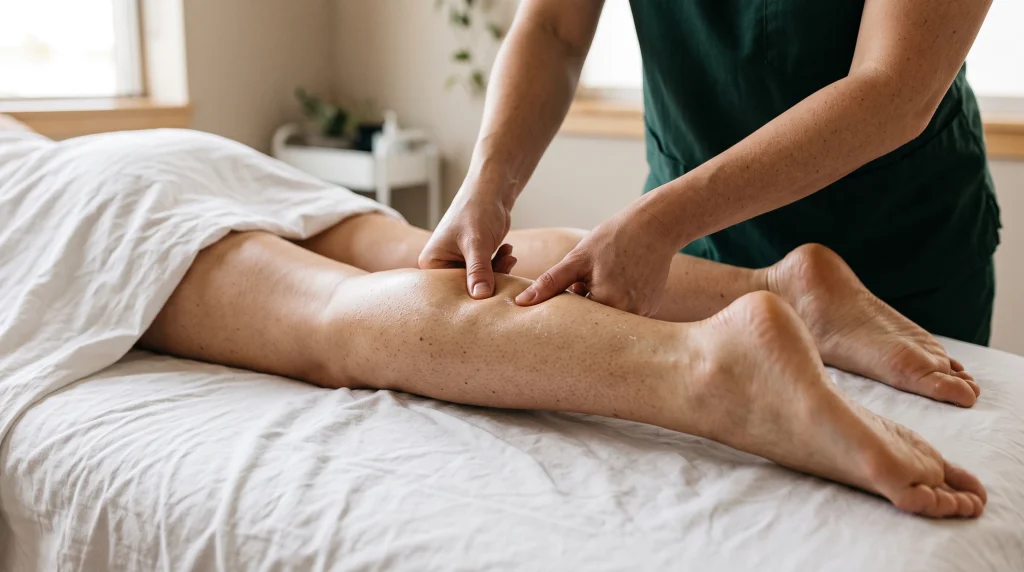
What to Expect During a Session
Before treatment begins, your therapist will usually ask where you feel tension and what you hope to get from the session. This is also the time to mention injuries, health concerns, sensitive areas, and the amount of pressure you prefer.
Deep tissue work tends to be slower and more focused than a general relaxation massage. Your therapist may spend extra time on one area and change the pressure as they move between different muscles.
You should feel comfortable speaking up at any point. Firm pressure can feel intense without becoming painful, and your therapist can make adjustments if something doesn’t feel right.
Some people notice mild soreness after focused work, especially if an area was already very tight. Pay attention to how you feel over the next day or two. That feedback can help your therapist fine-tune future sessions.
When Deep Tissue Massage May Not Fit
More pressure isn’t always better, and deep tissue massage isn’t right for every situation. If you have a recent injury, significant bruising, a skin infection, or a blood-clotting condition, check with a qualified healthcare professional before getting a massage.
You should also tell your therapist about recent surgery, osteoporosis, pregnancy, nerve symptoms, or blood-thinning medicines. Depending on your situation, a gentler massage may be more suitable. Your therapist may also avoid a sensitive area rather than working directly over it.
Some symptoms need medical evaluation instead of massage. Seek care if pain is severe, follows a serious fall or accident, causes weakness or numbness, or continues to get worse.
Massage can complement other forms of care, but it shouldn’t delay an evaluation when something feels unusual or serious.
Complementary Services
Deep tissue massage doesn’t have to be used on its own. Some people benefit from combining massage with other forms of care based on their symptoms and goals.
Acupuncture may be considered for certain types of pain or muscle tension. Chiropractic care may focus on joint movement and related muscle discomfort. For people who don’t tolerate deeper pressure well, therapeutic massage can offer a gentler option.
The best combination will be different for each person. A qualified provider can help you decide what makes sense for your needs.
Conclusion
he benefits of deep tissue massage depend on your body, activity level, and reason for seeking care. Some people respond well to focused deep work, while others feel better with moderate pressure or a mix of services.
At PalmLeaf Massage & Wellness, your session can be adjusted around your comfort and wellness goals. Pay attention to how your body responds during and after treatment, because the right amount of pressure should leave you feeling cared for, not overwhelmed.
Sources
Massage Therapy: What You Need To Know
National Center for Complementary and Integrative Health
Massage Therapy for Health: What the Science Says
National Center for Complementary and Integrative Health
Effect of Sports Massage on Performance and Recovery: A Systematic Review and Meta-Analysis
PubMed / BMJ Open Sport & Exercise Medicine
Massage Alleviates Delayed Onset Muscle Soreness After Strenuous Exercise: A Systematic Review and Meta-Analysis
PubMed / Frontiers in Physiology
This article is for informational purposes only and is not a substitute for professional medical advice, diagnosis, or treatment. Consult a qualified healthcare provider about your health or medical condition.