
A stiff neck after a long workday and a twisted ankle after a weekend walk need different care. Heat and cold packs in massage work best when the temperature fits what your body needs.
Here is how each may help, how to use packs safely, and when to check with a doctor first.
Quick Answer
Heat or Cold for Massage?
Gentle heat may ease muscle stiffness. A wrapped cold pack may temporarily ease pain and swelling after a minor injury. Avoid heat on a fresh injury or an area that’s already swollen.
How Heat and Cold Packs in Massage May Help
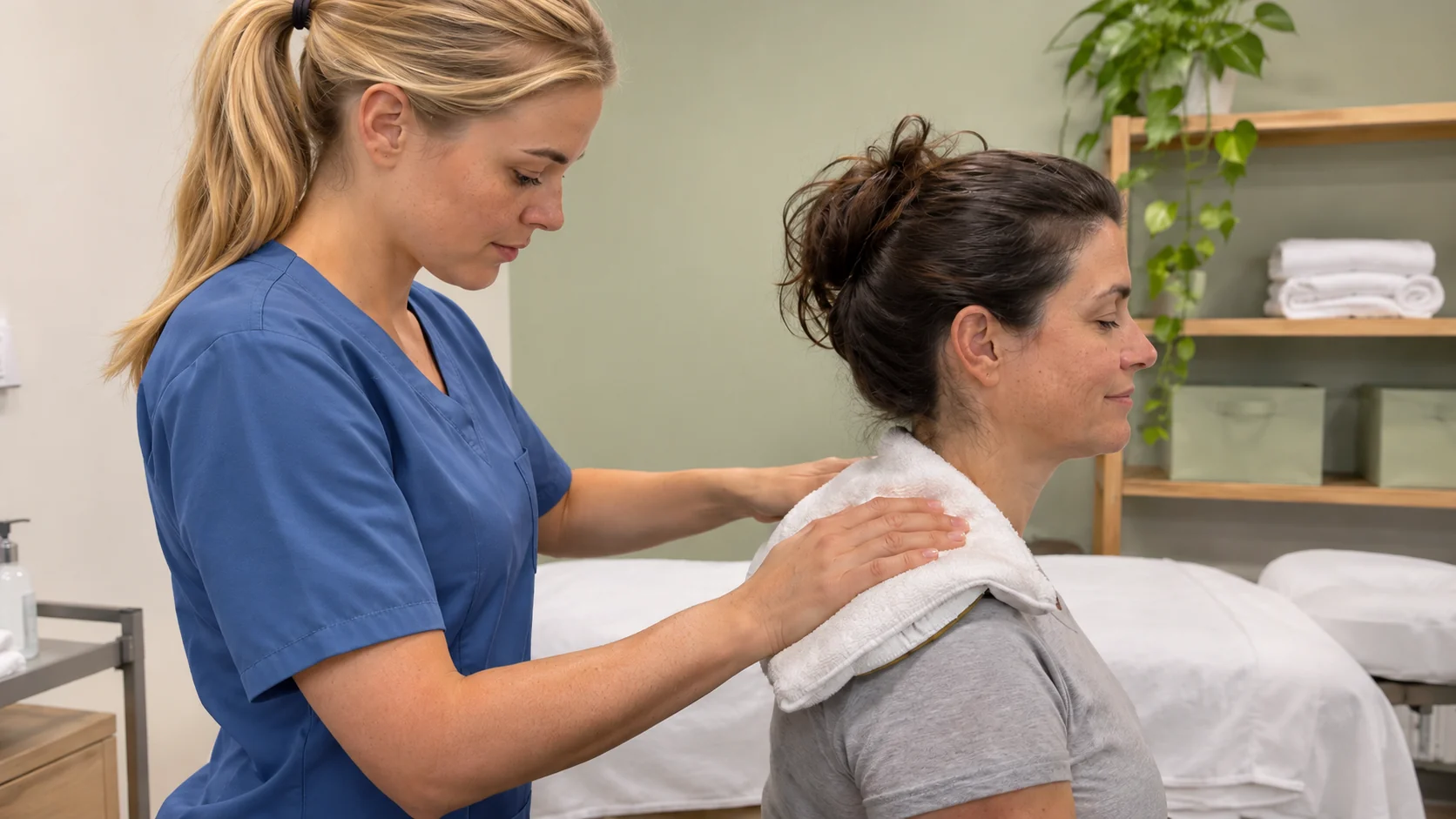
Heat packs include heating pads and warm towels, while cold packs include gel packs and wrapped ice, and both temporarily change how an area feels. Cleveland Clinic notes that ice tends to suit new injuries, while heat suits lingering problems such as muscle knots and stiff joints, so the timing of an injury matters.
Some people use packs around a massage to feel more comfortable, although a pack does not replace a medical evaluation for a new injury.
When to Use Heat
Gentle heat may ease muscle stiffness, such as a stiff neck after a long workday or persistent tightness in the shoulders, hips, and lower back. It tends to suit lingering tension rather than a new injury, and many people find the sensation of warmth calming and relaxing.
Aim for comfortably warm, and never use heat intense enough to sting or redden the skin. Avoid heat on a fresh injury or an area that is already swollen, because the Hospital for Special Surgery (HSS) notes that heat can increase inflammation in the first days after an injury.
When to Use Cold
A wrapped cold pack may temporarily ease pain and swelling after a minor injury, such as a mild sprain. Cold can temporarily numb the area, so it works best when applied for brief periods.
Cold is meant for symptom relief rather than pushing through pain, and once the swelling settles, Cleveland Clinic suggests switching to heat to ease stiffness.
How to Use Packs Safely
A few habits make packs safer to use at home:
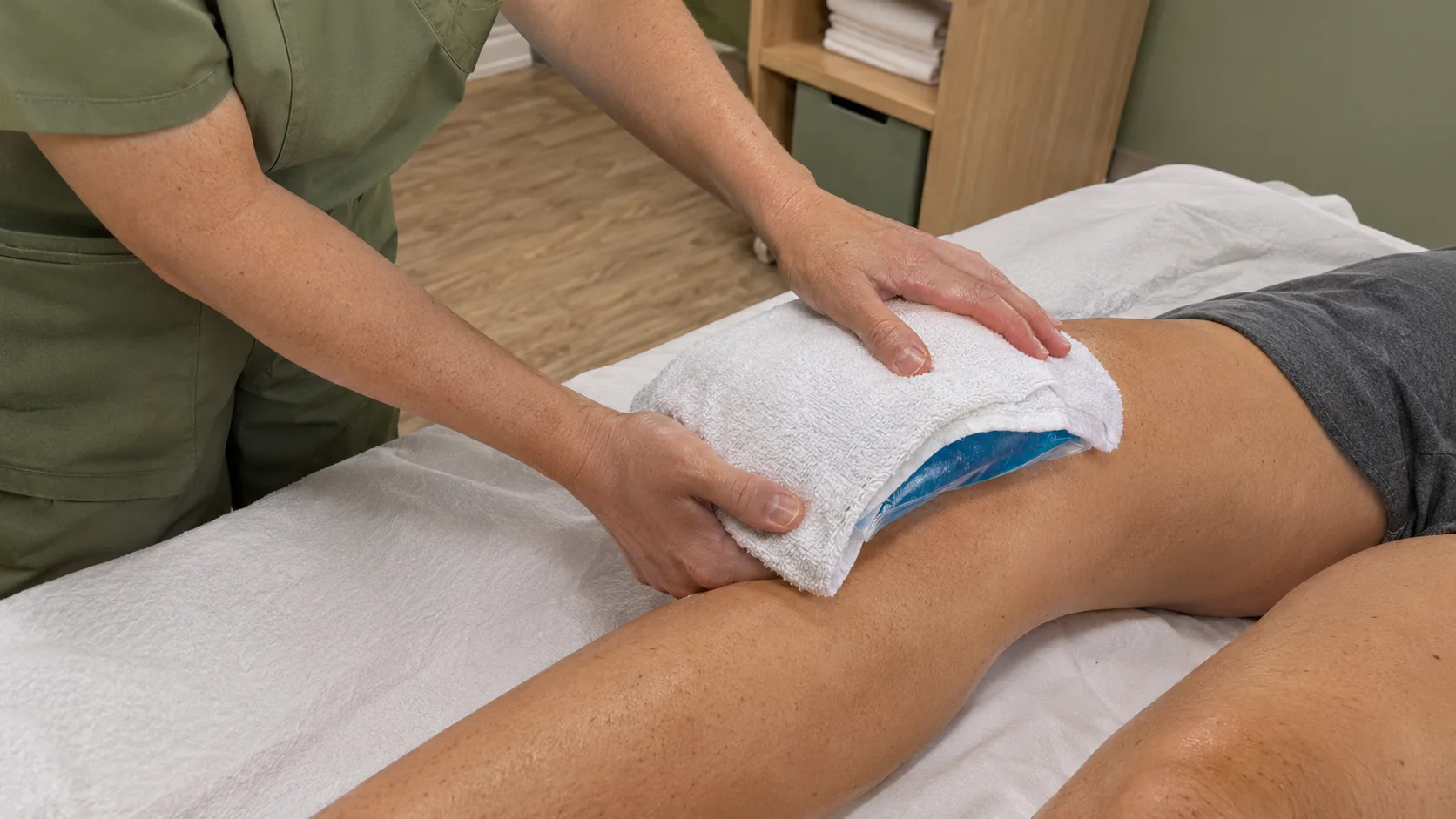
- Place a towel or other cloth between your skin and any pack, which helps prevent burns and other types of skin damage.
- Apply heat or cold for about 10 to 15 minutes at a time, then let your skin return to its usual temperature before reapplying.
- Check your skin periodically during use, and remove the pack right away if the area becomes unusually numb, painful, or discolored.
What to Expect From a Massage Session
Your therapist will likely ask about your goals, your health history, and any recent injury or swelling, and you can explain what pressure feels comfortable and speak up at any time during the session.
If a warm or cool pack is used, tell your therapist right away if it feels too hot or too cold. Afterward, you may feel relaxed, loose, or mildly tender, which is common.
When to Check First
Ordinary stiffness and soreness are different from a new injury or unexplained swelling, and these groups can help you decide what to do next.
Call 911 for:
- Sudden trouble breathing or chest pain, especially when new, unexplained pain or swelling is also present in one leg, since these can signal a blood clot
Get medical care promptly for:
- A suspected blood clot, which can cause new swelling, pain, warmth, or redness in one leg or arm
- Redness, warmth, or swelling that keeps increasing instead of gradually settling
Get medical care right away if you can’t put weight on an injured leg or can’t use the injured joint.
Contact a healthcare provider about any pain that is severe, unexplained, or progressively getting worse.
Ask a healthcare provider before using heat or cold packs on areas where you have reduced feeling or poor circulation. If you have Raynaud’s syndrome, ask before using a cold pack.
Before booking a massage, talk with your healthcare team if you have:
- Blood-thinning medicine or a bleeding disorder that your healthcare team monitors
- Severe osteoporosis
- Recent surgery or a recent heart attack, either of which may change what is safe for you
- A recently diagnosed leg blood clot
Mayo Clinic advises talking with your healthcare team before massage in several of these situations, including bleeding disorders, blood-thinning medication, and a recent heart attack. Massage therapists do not diagnose medical conditions or provide medical clearance.
Complementary Services
Massage and acupuncture offer different approaches to managing muscle tightness and discomfort, and some people use both, though neither replaces medical care when an underlying condition needs treatment. At PalmLeaf Massage & Wellness in Buffalo Grove, IL, you can explore massage therapy with pressure adjusted to your comfort level, or acupuncture.
Conclusion
Packs are simple tools that can make massage feel more comfortable, but they work best when you pay attention to how your body responds, because comfort is usually a better guide than intensity.
Before your next visit, think about when the discomfort started and whether an injury or swelling came with it, because sharing that information helps your therapist plan your session.
FAQs
How long should I leave a pack on?
HSS suggests about 10 to 15 minutes at a time. Let your skin return to its usual temperature before reapplying.
Can I fall asleep with a heating pad?
No. HSS advises against falling asleep with a heat source on, because heat can burn or damage skin.
How warm should a heat pack be?
Use a comfortably warm pack with a cloth between the pack and your skin. Remove it if it feels too hot.
Can a warm bath replace a heat pack?
Yes, a warm bath or shower can provide moist heat. Keep the water comfortably warm, not hot.
What if heat or cold does not help?
Contact a healthcare provider if your pain persists or gets worse. A massage therapist cannot diagnose the cause.
Sources
Ice vs. Heat: Which Is Better for Your Pain?
Cleveland Clinic
Ice or Heat: What’s Best for Your Pain?
Hospital for Special Surgery
Massage therapy
Mayo Clinic
About Venous Thromboembolism (Blood Clots)
Centers for Disease Control and Prevention
This article is for informational purposes only and is not a substitute for professional medical advice, diagnosis, or treatment. Consult a qualified healthcare provider about your health or medical condition.