
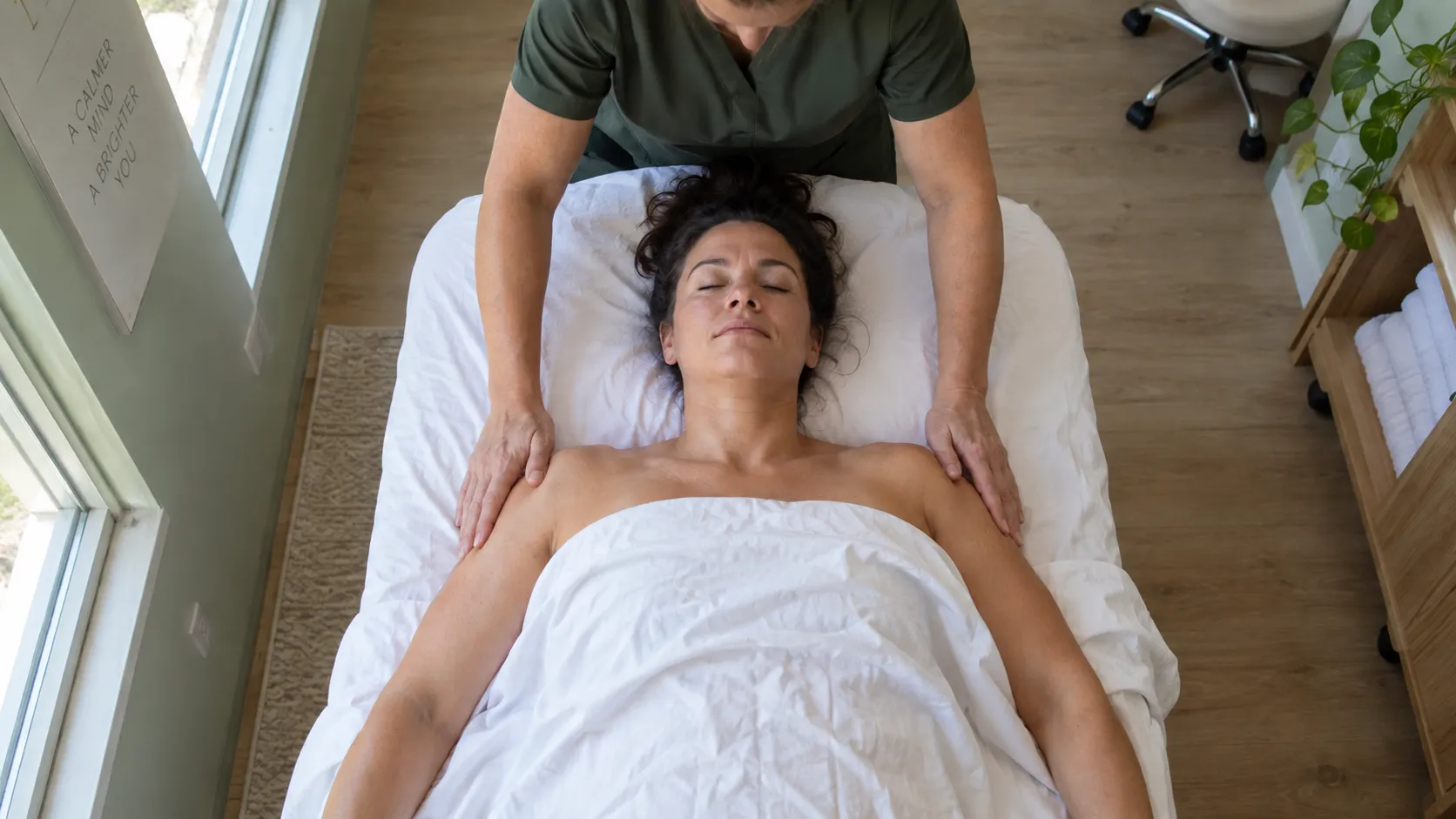
A packed calendar can leave a physical mark. Your shoulders rise, your jaw tightens, and even quiet time may not feel restful. Swedish massage for stress relief offers a gentle way to step out of that tense, wound-up feeling.
Instead of working deeply into one painful spot, Swedish massage uses flowing strokes and light to moderate pressure. Many people find it helps them feel calmer, looser, and more comfortable.
Quick Answer
Can Swedish massage help with stress?
Swedish massage may help ease muscle tension and support relaxation. Its gentle pressure and steady pace can help you slow down when stress leaves your body feeling tight or restless.
How Swedish Massage May Ease Stress
Stress affects more than your mood. It can lead to muscle tension, shallow breathing, headaches, poor sleep, and feeling worn down.
A calming massage session gives you dedicated time away from screens, tasks, and physical demands. That quiet break can be valuable when your days rarely slow down.
During Swedish massage, your therapist may use long gliding strokes, gentle kneading, circular movements, and light joint motion. These techniques can help relax tight muscles and support healthy blood flow.
The setting matters too. Steady touch, a quiet room, and a slower pace may help your body settle into a more relaxed state.
Research suggests massage may reduce short-term feelings of anxiety for some people. It may also support relaxation and a better sense of well-being. Results vary from person to person.
Massage doesn't replace mental health care. Consider professional support if stress, anxiety, or low mood is affecting your daily life.
What a Stress-Relief Session Feels Like
Swedish massage should feel soothing rather than painful. Before starting, your therapist should ask about your comfort, areas of tension, recent injuries, and health concerns.
Let your therapist know if you prefer lighter pressure or are sensitive to touch. You can also ask for a quiet session if you'd rather not talk.
You're always in control of your comfort. You can request more or less pressure at any time. You can also ask your therapist to avoid certain areas.
Speak up if the room temperature, music, or your position feels uncomfortable. Small changes can make it easier to relax.
After your massage, you may feel deeply relaxed or a little sleepy. You might also notice easier movement through your neck, shoulders, or back.
Give yourself some time to ease back into your day when possible. Water and a regular meal can also help you feel comfortable afterward.
Is Swedish Massage Right for Stress?
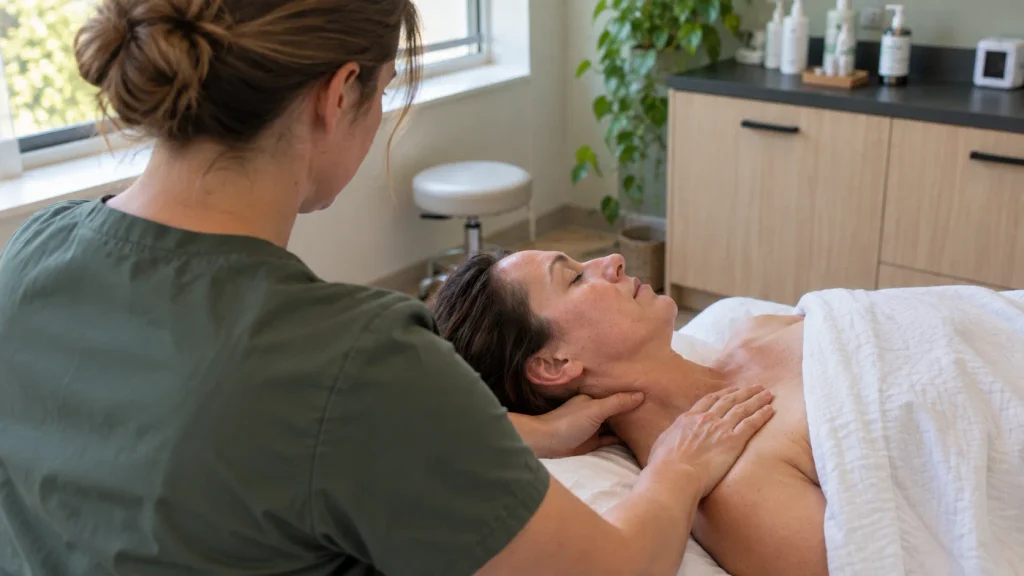
Swedish massage can be a good choice for general stress and everyday muscle tightness. It may also suit people who have trouble winding down or prefer gentle, whole-body care.
Office workers may find it useful when long hours lead to tight shoulders and upper back muscles. Parents and caregivers may value the uninterrupted time to rest. Active adults may also choose Swedish massage when they want recovery without deep pressure.
However, Swedish massage isn't the right starting point for every concern.
Talk with a healthcare professional before massage if you have:
- A recent or serious injury
- Severe or unexplained pain
- Fever or a contagious illness
- A known or suspected blood clot
- Significant or unexplained swelling
- Recent surgery or other major health changes
Tell your therapist if you're pregnant or taking medications that may affect your session. Sharing your health history helps your therapist adjust the massage when needed.
Seek medical care for new, severe, or worsening symptoms rather than trying to manage them with massage alone.
Complementary Services
Stress and muscle tension can overlap with posture, limited movement, or ongoing discomfort. In some cases, Swedish massage may be one part of a wider wellness plan.
Chiropractic Care
Massage may help relax muscles that feel tight or guarded. Chiropractic care may be considered for certain joint, movement, or posture-related concerns.
These services have different roles. Your symptoms and health history can help guide which approach makes sense.
Acupuncture
Some people also explore acupuncture for stress or muscle tension. Research on its benefits varies by condition, so results aren't the same for everyone.
If you're unsure which service fits your needs, discuss your symptoms and goals with a qualified provider.
At PalmLeaf Massage & Wellness, your care can be based on what you're feeling now. A relaxing Swedish session may be enough when your main goal is simply to slow down and release everyday tension.
Making Relaxation Last
A massage can offer a welcome reset, but your daily habits matter too. Small routines can help you manage tension between appointments.
A short walk or gentle stretch may help after hours of sitting. Regular meals and a steady bedtime routine can also support your overall well-being.
Slow breathing can be another simple tool. Even two quiet minutes before a meeting or after a commute may help you notice where you're holding tension.
You don't need a perfect wellness routine. The goal is to notice stress earlier and give your body regular chances to recover.
Swedish massage for stress relief can provide protected time to slow down and reconnect with your body. If gentle pressure and a calming pace sound right for you, PalmLeaf Massage & Wellness can help you plan a session around your comfort and goals.
Sources
Massage Therapy: What You Need To Know
National Center for Complementary and Integrative Health
Anxiety and Complementary Health Approaches: What the Science Says
National Center for Complementary and Integrative Health
Stress and Your Health
MedlinePlus
Tension Headache
MedlinePlus
This article is for informational purposes only and is not a substitute for professional medical advice, diagnosis, or treatment. Consult a qualified healthcare provider about your health or medical condition.