
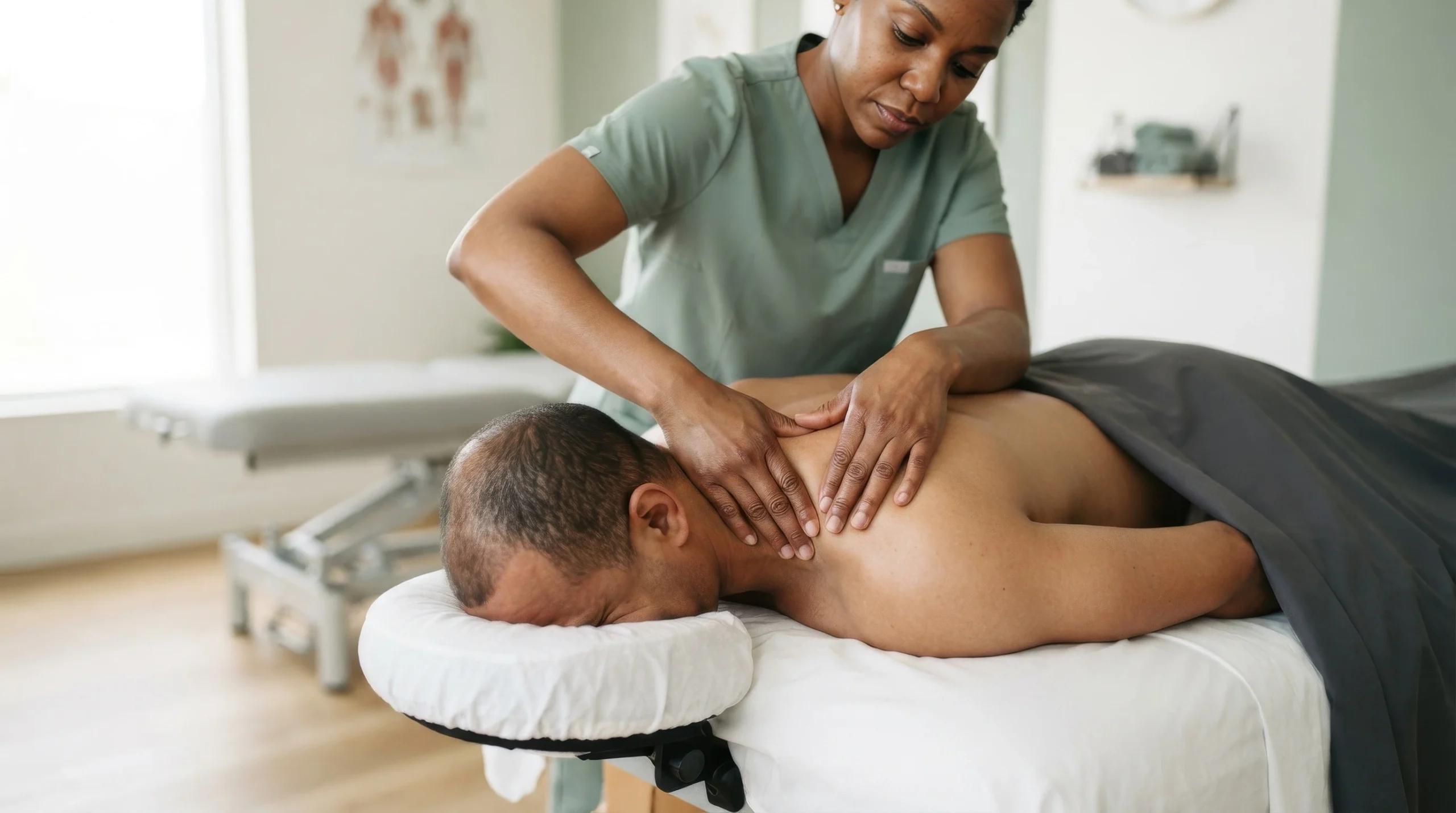
Trigger point stiff neck relief can make everyday movements, such as turning your head, checking a blind spot, or sleeping comfortably, much easier. One tight area may also cause discomfort across the shoulder, upper back, or head.
Most muscle-related stiffness responds to gentle movement, better daily habits, and appropriate hands-on care. The goal is to calm the area and restore movement, not force the tender spot away.
Quick Answer
What can help with stiff neck trigger point relief?
Gentle movement, heat or cold, light pressure, and posture changes may ease muscle tension. Severe, persistent, or worsening symptoms should be assessed by a qualified healthcare professional.
What Is a Trigger Point?
A trigger point is a sensitive, tight area within a muscle. People often call it a knot, although the muscle is not literally tied. Pressing the area may cause tenderness or send discomfort to another location.
Trigger points can develop in muscles that support the head and shoulders. They may cause a dull ache, stiffness, sharp tenderness, or a pulling feeling during movement. Headaches may also occur when the upper neck and shoulder muscles remain tense.
Why Stiffness Returns
A stiff neck does not always follow a major injury. It may build after long periods at a computer, looking down at a phone, driving, carrying a heavy bag, or sleeping with the neck in an awkward position.
Stress may also play a part. Raising your shoulders or clenching your jaw keeps nearby muscles working when they should be resting.
A new workout or minor strain can temporarily irritate the area. Deep pressure or aggressive stretching too soon may make recent symptoms worse.

Gentle Relief at Home
Small actions repeated throughout the day are often more comfortable than one long stretching session.
Try Heat or Cold
A warm shower or warm compress may help a stiff, achy muscle feel less guarded. Use comfortable warmth for 15 to 20 minutes, and place a cloth between your skin and a heating pad.
Cold may feel better during the first day or two after a new strain, especially if the area feels inflamed. Wrap the cold pack and avoid placing it directly on your skin.
Keep Moving Gently
Complete rest may allow stiffness to linger. Slowly turn your head from side to side, nod gently, or roll your shoulders backward.
Stay within a comfortable range. Do not push through sharp pain or force your chin toward your shoulder.
Use Light Pressure
Gentle fingertip pressure or a massage ball against a wall may help a tender upper-shoulder muscle relax. Begin with light pressure for 20 to 30 seconds while breathing slowly.
Do not press on your throat, directly over your spine, or anywhere that causes dizziness, tingling, numbness, or pain down your arm. Intense pressure is not required.
Adjust Your Setup
Raise your monitor so you can see it without pushing your head forward. Keep frequently used items close and support your forearms when possible.
Lift your phone closer to eye level and take a brief movement break every 30 to 60 minutes. You do not need perfect posture all day. Changing positions regularly is more realistic.
What to Avoid
Avoid cracking your neck, pulling hard on the sore area, or using a powerful massage gun near your neck. These approaches may irritate a sensitive muscle or joint.
Limit heavy lifting and overhead activity until comfortable movement returns. Your pillow should support a neutral head and neck position without bending your neck too far upward or downward.
How Hands-On Care May Help
Therapeutic Massage
Therapeutic massage may help ease muscle tension and improve short-term comfort when stiffness is connected to tight or overworked muscles. A massage therapist can adjust the pressure and work with muscles in the neck, upper shoulders, and upper back. Treatment should feel controlled and comfortable rather than forceful.
Acupuncture
Acupuncture may be considered when neck discomfort keeps returning or has become an ongoing problem. It may help reduce pain and muscle tension for some people, although results vary. Acupuncture may complement massage when the area is sensitive to pressure or stress appears to be contributing to the tension.
Chiropractic Care
Chiropractic care looks at how the joints, muscles, posture, and movement patterns work together. It may help when neck stiffness includes limited joint movement or keeps returning during certain activities. Care may include gentle joint mobilization, an adjustment, soft-tissue work, or movement guidance.
Combining Services
At PalmLeaf Massage & Wellness, these services may be used separately or together. Massage may address tight muscles while chiropractic care evaluates restricted joint movement. Acupuncture may provide another option when discomfort is persistent or sensitive to pressure.
A provider can review your symptoms, health history, and goals before recommending an approach. This helps ensure that each service has a clear purpose rather than assuming every service is needed.
When Medical Care Comes First
Hands-on care is not the right first step after a serious injury or when neck pain occurs with fever, weakness, lasting numbness, difficulty walking, or pain traveling down an arm. These symptoms should be medically evaluated before massage, acupuncture, or chiropractic care.
When to Seek Care
Seek urgent medical attention after a serious fall, collision, or other neck injury. Severe neck pain with fever, weakness, difficulty walking, confusion, fainting, vision changes, or trouble speaking also needs prompt evaluation.
Contact a healthcare professional if you have lasting numbness or tingling, pain traveling down an arm, or symptoms that keep getting worse. These signs may have a cause other than routine muscle tension.
Sources
Myofascial Pain Syndrome: What It Is, Symptoms & Treatment
Cleveland Clinic
MedlinePlus
Chronic Pain and Complementary Health Approaches
National Center for Complementary and Integrative Health
Neck Pain: When to See a Doctor
Mayo Clinic
This article is for informational purposes only and is not a substitute for professional medical advice, diagnosis, or treatment. Consult a qualified healthcare provider about your health or medical condition.