
Sharp heel pain with your first steps out of bed is a common sign of plantar fasciitis. Acupuncture for plantar fasciitis may ease that pain for some people, though results vary.
Below, we cover what causes the pain, how acupuncture may help, and when to check with a doctor first.
Quick Answer
Can Acupuncture Help Plantar Fasciitis?
Acupuncture may help ease heel pain from plantar fasciitis for some people, especially alongside stretching and supportive shoes. Results vary, and it is not a sure fix.
How Acupuncture for Plantar Fasciitis May Help
What a Case of Plantar Fasciitis Is
Plantar fasciitis happens when the thick band of tissue under your foot becomes irritated from repeated strain. Mayo Clinic calls it one of the most common causes of heel pain, often a stabbing ache with the first steps in the morning.
Worn-out shoes, flat feet, high arches, extra weight, and long hours on hard floors can all add strain. That puts teachers, factory workers, and healthcare workers at risk, not just runners. A tight Achilles tendon often goes along with it, so the lower leg matters too.
How Acupuncture May Help
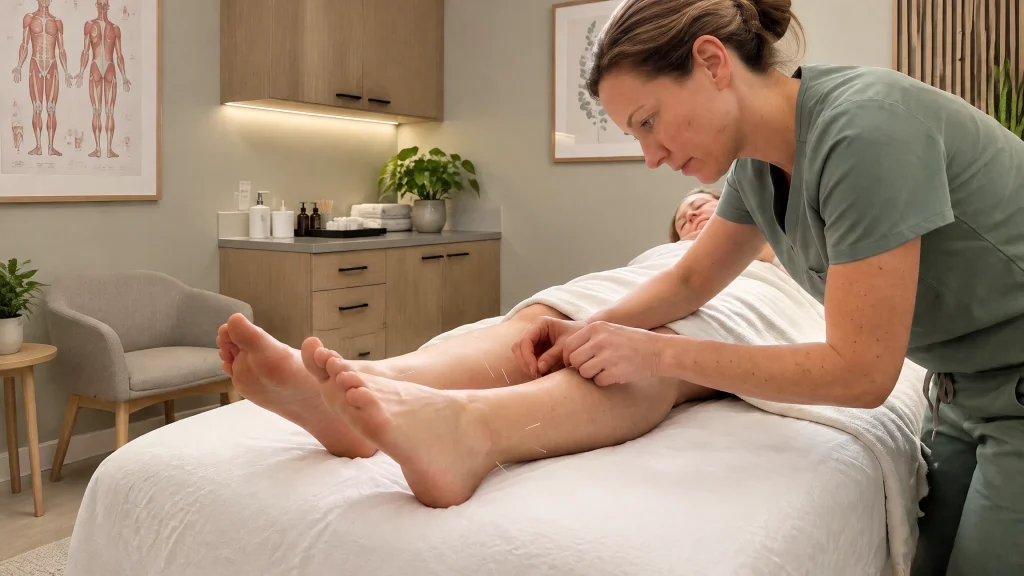
A licensed acupuncturist places thin, sterile needles at specific points, which may include the foot arch, the calf, and the leg.
The National Center for Complementary and Integrative Health (NCCIH) says acupuncture is mostly used for pain, though how it works is not fully understood.
Many people feel relaxed during a session, and some report less sharp heel discomfort afterward.
3 Ways Acupuncture May Help Plantar Fasciitis
Eases Sore Spots
Needles placed near the heel and arch may leave the area feeling less tender, and some people notice that the sharp first-step pain softens. The effect can be temporary.
Works the Whole Leg
Because tension higher up the leg may feed heel pain, practitioners often treat points in the calf and leg too, not only the heel. Treatment points vary based on your symptoms and the practitioner’s approach.
Pairs With Other Care
Acupuncture does not involve medication, so it can sit alongside stretching, supportive footwear, and rest. Many people find it easier to keep up with those daily habits when the heel feels a little less sore.
What to Expect From an Acupuncture Visit
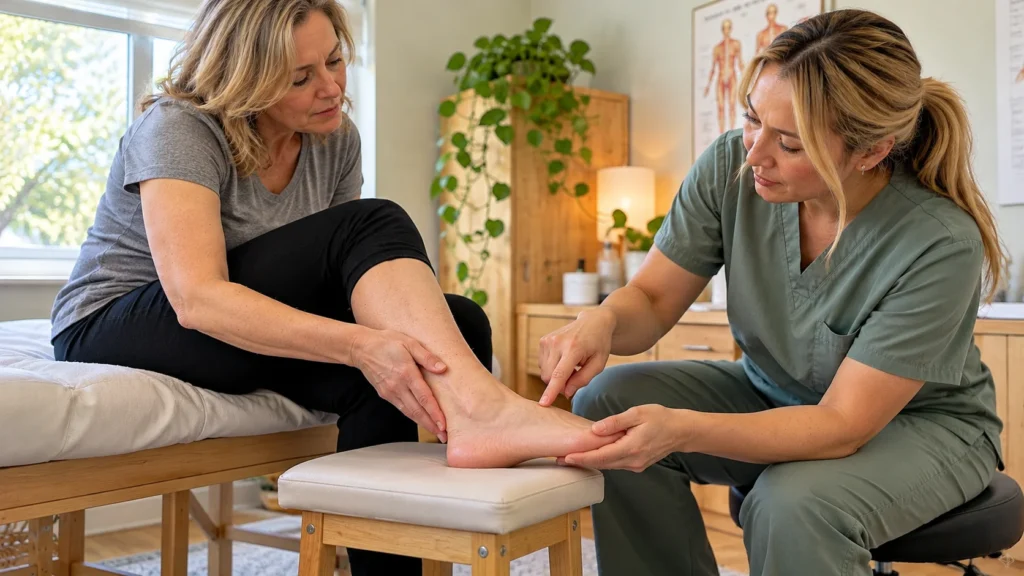
Your acupuncturist will ask about your symptoms and when the pain is worst. They may check your foot and calf before placing the needles, and you can speak up right away if anything feels uncomfortable. Afterward, you may feel relaxed or mildly sore.
Habits between visits still play a significant role. Cleveland Clinic suggests sturdy, cushioned shoes with arch support, regular stretching, and avoiding flip-flops, flat sneakers, and bare feet on hard floors.
Most states license acupuncturists, so it helps to confirm a practitioner’s license and ask about their experience with heel pain.
When to Check First
Heel pain has several possible causes, so a doctor is the right person to sort out anything unusual. Cleveland Clinic advises seeing a healthcare provider if heel pain does not improve on its own within a week. Check with a medical provider first if you notice:
- Numbness or tingling in the foot
- Swelling, redness, or warmth around the heel
- Heel pain after a recent injury or fall
- Pain that keeps getting worse or does not improve after a week of home care
- A bleeding disorder or blood thinner medication, which you should discuss with your doctor and acupuncturist before treatment
- A pacemaker, which you should mention before any acupuncture that uses electrical stimulation
The National Center for Complementary and Integrative Health cautions against using acupuncture to postpone seeing a health care provider. If your heel pain is new, severe, or getting worse, see a healthcare provider to find out what is causing it before trying acupuncture.
Complementary Services
Acupuncture and massage offer different ways to help manage recurring heel and foot discomfort. Acupuncture uses thin needles at specific points, while massage uses hands-on techniques to ease tightness in the foot and calf.
Some people use both services as part of a wellness routine, though neither replaces medical care when an underlying condition needs treatment.
Conclusion
Acupuncture may help some people manage plantar fasciitis pain, especially when combined with stretching and supportive footwear. Results vary, and improvement may take time.
Before your first visit, notice when the pain is worst, such as the first steps of the day or after long hours on your feet, because that pattern helps your acupuncturist plan the session.
FAQs
Where do acupuncturists place needles for heel pain?
Often in the foot arch, calf, and leg, not only the heel. Points vary by practitioner and by your symptoms.
How many acupuncture sessions will I need?
The number of visits depends on your symptoms and how you respond. Your acupuncturist can discuss a treatment plan after your first visit.
Is acupuncture safe for heel pain?
Relatively few complications are reported when needles are sterile and used properly, according to NCCIH. Tell your acupuncturist about your health history first.
How long does plantar fasciitis last?
Cleveland Clinic says healing can take a few weeks to a few months. See a doctor if pain does not improve.
Does acupuncture for plantar fasciitis hurt?
Cleveland Clinic says needles usually feel like nothing, with an occasional brief pinch. Toes and inflamed areas can feel more sensitive.
Sources
Plantar Fasciitis: Symptoms and Causes
Mayo Clinic
Plantar Fasciitis: Symptoms, Causes & Treatment Options
Cleveland Clinic
Acupuncture: Effectiveness and Safety
National Center for Complementary and Integrative Health (NCCIH)
Does Acupuncture Hurt?
Cleveland Clinic
This article is for informational purposes only and is not a substitute for professional medical advice, diagnosis, or treatment. Consult a qualified healthcare provider about your health or medical condition.