
A massage can leave you feeling loose, calm, and a little tired. Drinking water after a massage is a simple habit, though it works differently than many people think.
Here’s why therapists often offer water, how much you may need, and what really helps you feel comfortable after a massage.
Quick Answer
Why Drink Water After a Massage?
Drinking water after a massage may help you return to your usual hydration level. It is not a detox, and a glass of water plus regular sipping is usually plenty.
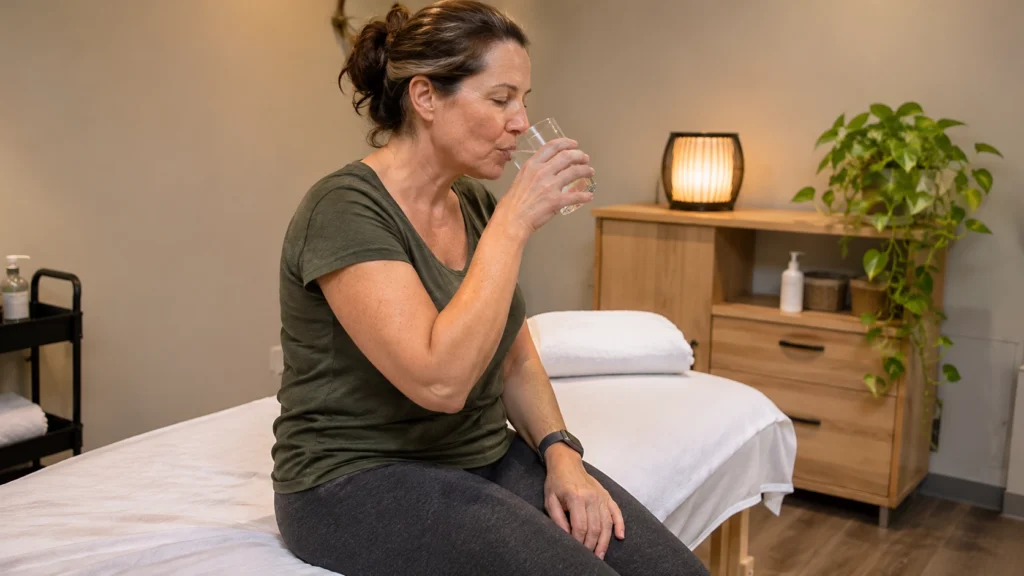
How Drinking Water After a Massage May Help
What a Post-Massage Water Habit Is
Drinking water after a massage simply means having a glass of water once your session ends. Many therapists suggest it as part of aftercare, although the explanation behind that advice is often misunderstood.
How Massage May Help
Massage involves hands-on techniques applied to muscles and other soft tissue. Mayo Clinic notes that it may help reduce stress, ease pain and muscle stiffness, and support relaxation.
Many people feel calm and a little sleepy afterward, and that slowed-down state may make it easier to notice how little you have had to drink all day.
Does Drinking Water After a Massage Flush Out Toxins?
No. Massage is not known to release stored toxins that water must wash out, and the American Massage Therapy Association’s Massage Therapy Journal calls that idea a massage myth. Your kidneys already remove wastes and extra fluid from your body, according to the National Institute of Diabetes and Digestive and Kidney Diseases.
Drinking water supports normal hydration, but you do not need extra water to detox after a massage. The same journal adds that offering water to someone who is thirsty does no harm.
3 Ways Water May Help After a Massage
Helps You Rehydrate
If you arrived thirsty, exercised beforehand, or spent time in the heat, a glass of water afterward may help you get back to your usual hydration level. Mayo Clinic notes that exercise and hot, humid weather can raise how much fluid you need.
Relaxing in a warm room can also make you aware of thirst that you pushed aside earlier in the day.
May Help Some Headaches
Not drinking enough water can sometimes contribute to headaches. If you were already dehydrated before your appointment, drinking water may help. However, headaches can have many causes, so do not assume that water will fix every headache after massage.
Encourages a Slower Routine
Taking a few minutes to drink water gives you a natural pause before rushing back to work, errands, or a workout. Your body may respond best when you give it time to settle after hands-on care.
Gentle walking, easy stretching, and a good night’s sleep can all complement the effects of massage.
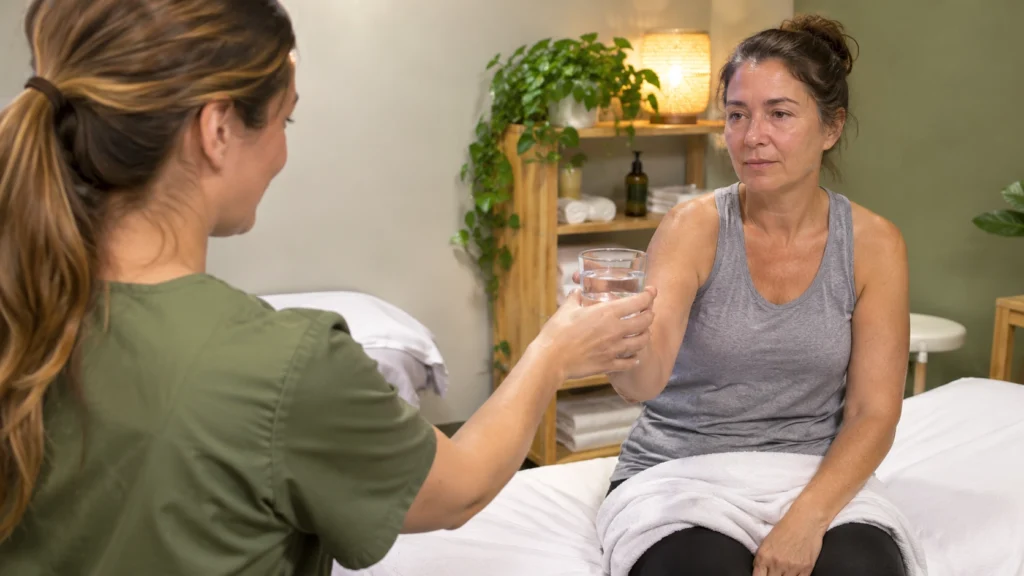
What to Expect From a Massage Session
Before you start, your therapist usually asks about your goals and any sore or sensitive areas. You can explain what pressure feels comfortable and speak up at any time. Afterward, you may feel relaxed, loose, or mildly tender.
Mayo Clinic says some soreness can happen the next day depending on the type of massage, though you should not feel severe pain during one. If your muscles feel tender, choose light movement over an intense workout right afterward.
Drinking enough throughout the day is usually more important than drinking extra water immediately after a massage. Feeling comfortable, rarely being thirsty, and having pale yellow urine are useful signs of hydration, although individual needs vary.
When to Check First
Most people can return to their usual drinking habits after massage, but some health conditions call for extra care. Follow your doctor’s advice if you have been told to limit fluids. You should also speak with your healthcare provider before massage if you have certain medical conditions or recent injuries.
Common examples include:
- A recent heart attack, a known or suspected blood clot, or recent surgery
- Blood thinners, a bleeding disorder, severe osteoporosis, broken bones, or burns
Mayo Clinic suggests talking with your health care team before a massage if you take blood thinners or have had a recent heart attack. Massage therapists do not diagnose medical conditions or provide medical clearance.
After a massage, get urgent medical attention for fainting, severe confusion, or a sudden, severe headache. Tell your provider if pain during or after a session is severe or does not ease.
Complementary Services
Massage and acupuncture offer different ways to support comfort and relaxation. Massage uses hands-on techniques to ease muscle tightness, while acupuncture is another option some people choose as part of a wellness routine.
Some people use both services together, though neither replaces medical care when an underlying condition needs treatment. PalmLeaf Massage & Wellness in Buffalo Grove, IL offers massage therapy and acupuncture.
Conclusion
Water after a massage is a small, comfortable habit rather than a detox, and its real value is helping you return to your usual hydration while giving you a moment to slow down.
Before your next session, notice how much you have had to drink that day, and keep a water bottle within reach so a drink is easy afterward.
FAQs
Why do therapists offer water?
It is a long-standing habit and a thoughtful touch. Offering water is harmless if you are thirsty, and many therapists treat it as aftercare.
Will water ease soreness?
Water will not instantly erase soreness. Mild tenderness is common after deeper work, but see a doctor if pain is severe or lingers.
Do tea and other drinks count?
Yes. Mayo Clinic says tea, coffee, and milk count toward your daily fluids, and food adds some too.
How soon should I drink water?
There is no set timing. Many people sip a glass soon after their session, then keep drinking normally as the day goes on.
How much water should I drink?
Needs vary, so there is no set amount. A glass and regular sipping is a reasonable start, and your doctor’s fluid limits come first.
Sources
Massage therapy – About
Mayo Clinic
Water: How much should you drink every day?
Mayo Clinic
Myths, Massage and Research
Massage Therapy Journal, American Massage Therapy Association
Your Kidneys & How They Work
National Institute of Diabetes and Digestive and Kidney Diseases
This article is for informational purposes only and is not a substitute for professional medical advice, diagnosis, or treatment. Consult a qualified healthcare provider about your health or medical condition.