
Reiki energy healing is a gentle, hands-on practice that many people try for calm and comfort. It can sound mysterious if you have never seen a session.
Here is what Reiki is, what a visit looks like, and when it makes sense to talk with a doctor first.
Quick Answer
What Is Reiki Energy Healing?
Reiki is a Japanese practice using light touch or hands held above the body. Some people find sessions relaxing, but its health benefits are not scientifically established. It should not replace medical care.
How Reiki Energy Healing May Help
What Reiki Is
Reiki is built on the idea of a universal life force energy that flows through every living thing. Practitioners believe stress, injury, or emotional pain can leave that energy blocked, and they use light touch or hovering hands to help it move. The word combines "rei," meaning universal, and "ki," meaning life force.
A practitioner does not claim to create the energy and is instead said to act as a channel through which it passes to the client. Cleveland Clinic describes Reiki as an energy-healing practice with roots in Japan, and the MSD Manual notes that practitioners use very light contact or none at all.
NCCIH says the energy field behind Reiki has not been shown to exist, so it is best understood as a belief of the practice rather than a measured fact.
How Reiki May Help
Most people describe Reiki as relaxing, and Cleveland Clinic suggests that the quiet room, the attention of a practitioner, and your own expectations may explain much of the calm people feel. That does not make the calm any less real to the person experiencing it. Reiki has not been clearly shown to treat any health condition, including pain, anxiety, or depression.
Reiki fits best as a comfort beside regular care, never as a replacement for it. Cleveland Clinic calls it a complementary therapy to use alongside the treatment your provider recommends.
3 Ways Reiki May Feel Helpful
A Quiet Pause
A session gives you a stretch of focused time with no phone, no tasks, and nothing to do but rest, and many people find that pause calming on its own.
Gentle, Light Touch
Touch is very light or hovering, with no rubbing or kneading, and you usually stay fully clothed. That can suit people who find deeper bodywork uncomfortable or who have sensitive areas they would prefer not to have pressed.
Comfort During Hard Seasons
Some people turn to Reiki during a stressful stretch or a long recovery as a calming add-on, though a doctor should still guide any treatment for illness or pain.
What to Expect From a Reiki Session
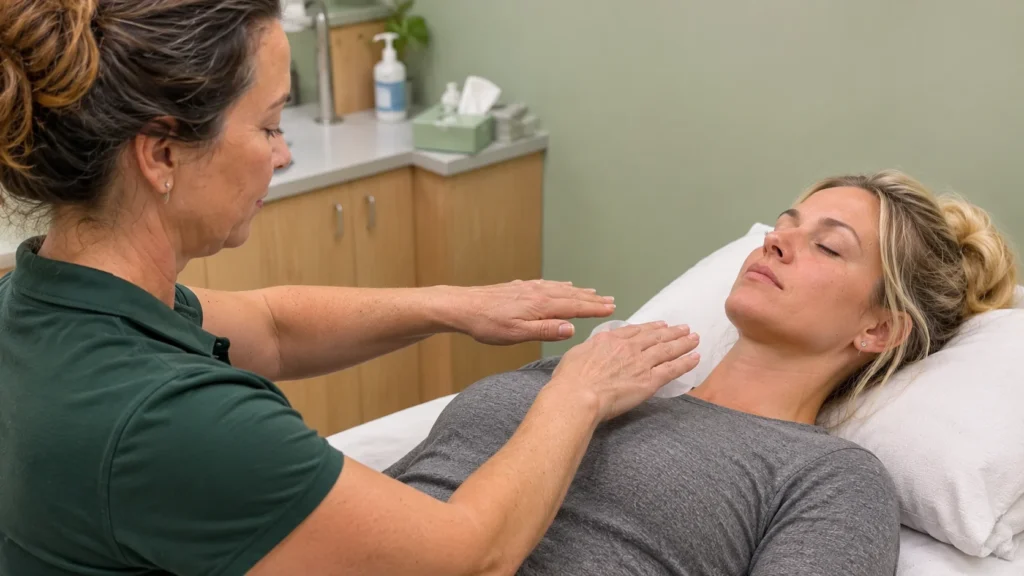
You usually lie on a table while the practitioner rests hands lightly on the body or holds them just above it, often moving through several positions. Sensations vary considerably from person to person, so some people feel warm or sleepy while others feel nothing at all.
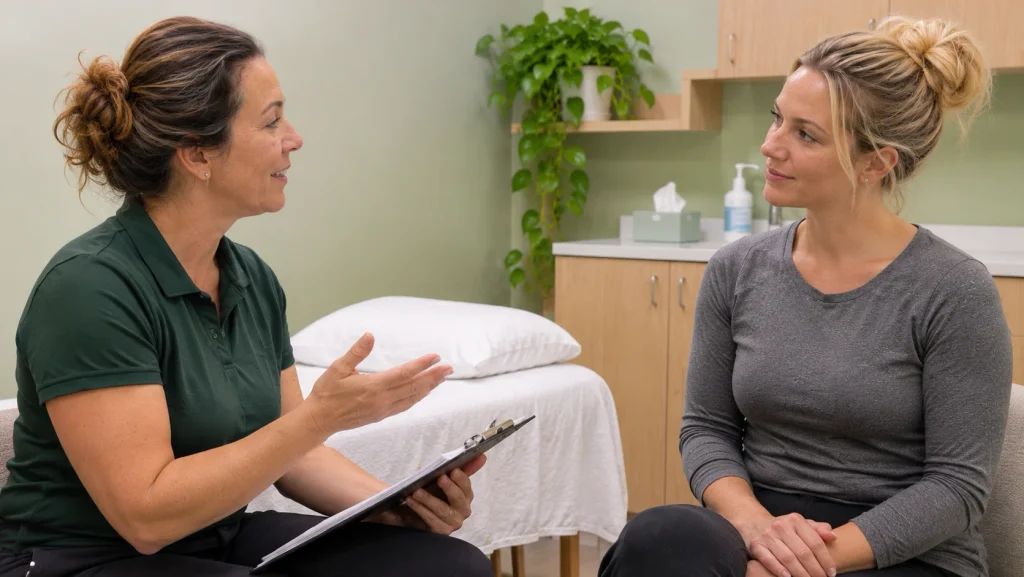
Some people report feeling sleepy, emotional, or relaxed afterward, while others notice no change. Ask about the practitioner's training and what the visit includes before you book, and avoid anyone who promises to fix a disease or tells you to stop treatment.
When to Check First
Reiki appears to be low risk, but a doctor is the appropriate person to evaluate any new or serious symptom. Cleveland Clinic names the main risk as using Reiki instead of needed medical evaluation or treatment, which can delay care. Check with a medical provider first if you notice:
- A new, unexplained, or worsening symptom
- Anxiety or low mood that affects daily life
- A diagnosis or treatment plan you feel tempted to delay or skip
NCCIH says Reiki is not a substitute for medical advice and encourages you to discuss care decisions with your provider. Practitioners do not diagnose medical conditions or provide medical clearance.
Complementary Services
Massage and acupuncture offer different ways to look after yourself if you want support beyond Reiki. Massage uses hands-on techniques to ease muscle tightness, while acupuncture is another option some people choose.
Some people use both as part of a wellness routine, though neither replaces medical care when an underlying condition needs treatment. PalmLeaf Massage & Wellness in Buffalo Grove, IL offers massage therapy and acupuncture.
Conclusion
Reiki may provide a calming experience for some people, but its medical benefits remain unproven. It is best viewed as a complementary practice rather than a replacement for healthcare.
If you try a session, jot down how you feel that evening and the next morning. Those notes will show you whether it is worth repeating.
FAQs
Does Reiki hurt?
No. The touch is very light or hovering, with no rubbing or kneading, so most people describe it as gentle.
Is Reiki a religion?
No. It has no required beliefs, though it draws on a spiritual idea of life force energy, so ask a faith leader if unsure.
Can I do Reiki on myself?
Some people learn self-treatment by resting their own hands on the body. It works as a calming routine, with no promise of more.
Does Reiki remove bad energy?
Practitioners describe it as clearing blocked energy. That energy has not been measured, so it is best seen as a belief of the practice.
Should I tell my doctor about Reiki?
Yes. Tell your provider about Reiki, since NCCIH encourages discussing any treatment or care decisions with them.
Sources
Reiki
National Center for Complementary and Integrative Health
What Is Reiki? And Does It Actually Work?
Cleveland Clinic
Reiki
MSD Manual Consumer Version
This article is for informational purposes only and is not a substitute for professional medical advice, diagnosis, or treatment. Consult a qualified healthcare provider about your health or medical condition.