
Manual lymphatic drainage is a very gentle form of massage that many people hear about but few fully understand. It is mainly used when swelling builds up after an illness or medical treatment.
Here is how it works, what a session looks like, and when a doctor should weigh in first.
Quick Answer
What Does Manual Lymphatic Drainage Do?
Manual lymphatic drainage uses very light strokes that may help move trapped fluid toward working lymph vessels. It is mainly used for lymphedema, a fluid buildup in tissues, and results vary.
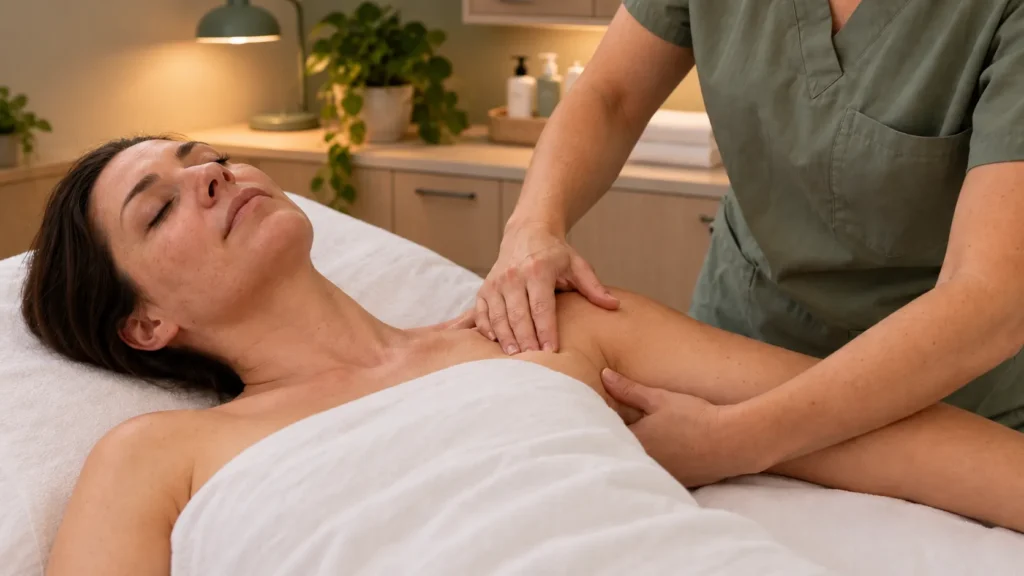
How Manual Lymphatic Drainage May Help
What a Lymphatic Drainage Massage Is
Manual lymphatic drainage, often shortened to MLD, is a gentle massage technique. Cleveland Clinic describes it as a way to relieve swelling linked to lymphedema by guiding fluid toward lymph vessels and nodes that are still working well.
Lymphedema is persistent swelling, most often in an arm or leg, that can follow some cancer treatments and other illnesses. Mayo Clinic describes MLD as a light technique that helps move trapped fluid toward areas with working lymph vessels.
How Massage May Help
A therapist uses very light pressure, closer to a slow stretch of the skin than a typical massage. The session usually starts over areas with lymph nodes, such as the neck and armpits, and then moves fluid from the swollen area toward those nodes. Because it is not a deep tissue technique, firmer pressure is not the goal.
Some people describe the touch as calming, though it feels quite different from a firm muscle massage.
3 Potential Benefits of Lymphatic Drainage
Eases Swelling
Gentle strokes may help extra fluid move away from swollen tissue, so an arm or leg may feel less puffy, and similar light techniques are also used for facial puffiness. Cleveland Clinic notes that results may not show right away and may not happen for everyone.
Fits Into Lymphedema Care
MLD is usually one piece of a larger plan, and it is not meant to be your only treatment. Mayo Clinic lists it alongside compression bandages and garments, gentle exercise, and pneumatic compression, often guided by a specialized lymphedema therapist.
Supports Calm Downtime
The slow, steady rhythm can make a session feel like a quiet break in a busy week, and many people value that calm on its own, even though it is separate from any effect on swelling.
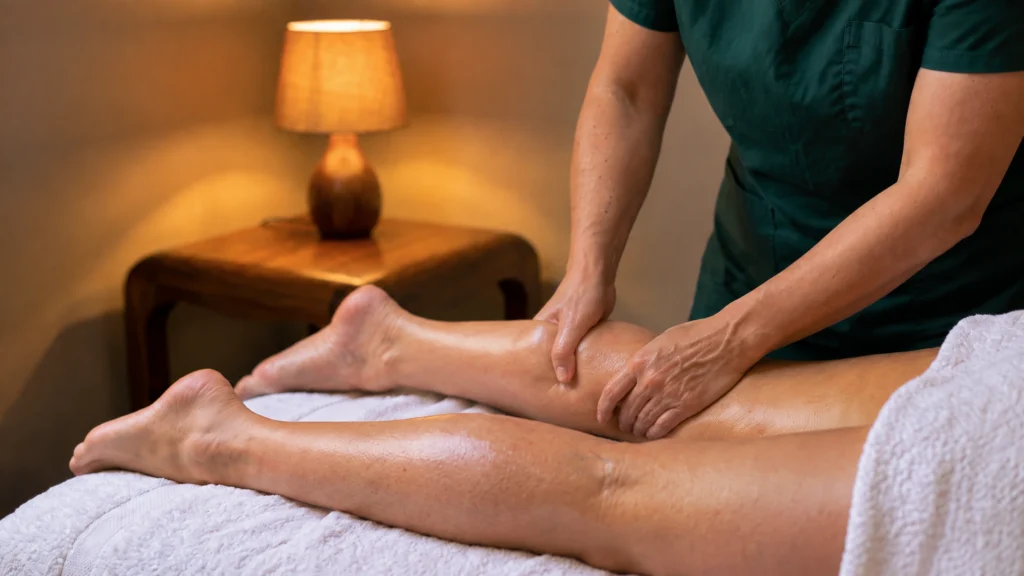
What to Expect From a Lymphatic Drainage Massage
Your therapist will ask about your swelling, health history, and any recent surgery or cancer care. You can explain what feels comfortable and speak up at any time, and afterward, you may feel relaxed or a little tired.
If you use compression garments, follow your care team's instructions about when to wear them. Tell your healthcare provider if you notice headaches, nausea, or unusual fatigue after a session. Between visits, it is wise to follow the plan your care team provided instead of adding unfamiliar routines on your own.
When to Check First
New, unexplained, or worsening swelling should be checked by a healthcare professional before massage. MLD may not be appropriate for people with certain medical conditions, including:
- A skin infection or cellulitis
- A blood clot or deep vein thrombosis
- Active cancer in or near the area, or skin damaged by radiation
- Heart disease, kidney disease, or kidney failure
- A fever, or a past stroke
Sudden leg swelling with pain, warmth, or a change in skin color needs prompt medical attention, because these can be signs of a blood clot, and chest pain or sudden shortness of breath needs emergency care. Cleveland Clinic lists these conditions as reasons MLD may not be recommended, and Mayo Clinic says to avoid it with a skin infection, blood clots, or active cancer in the affected area. Massage therapists do not diagnose medical conditions or provide medical clearance.
Complementary Services
Massage and acupuncture use different approaches to wellness. Manual lymphatic drainage focuses on moving fluid through gentle skin-level techniques. Acupuncture may be used for certain types of discomfort, but it is not a replacement for medical treatment of swelling.
Some people use both services as part of a wellness routine and keep their care team informed. PalmLeaf Massage & Wellness in Buffalo Grove, IL offers massage therapy and acupuncture.
Conclusion
MLD is a specialized, gentle technique that may help move fluid when lymph flow has slowed, and it usually sits alongside other care. It works best as one piece of a plan your doctor knows about.
Before booking, write down where the swelling shows up, when it feels worse, and any recent surgery or treatment, so your therapist and doctor are working from the same details.
FAQs
What does lymphatic drainage feel like?
Some people describe it as very light and slow. It should not feel like deep pressure, so tell your therapist if anything hurts.
Is lymphatic drainage a detox?
Its main purpose is easing swelling, not detox or weight loss. Results vary, and a doctor can explain what fits your situation.
Can I do lymphatic drainage at home?
Some people try gentle self-massage at home. Ask your healthcare provider first, especially if you have lymphedema.
Can it help facial puffiness?
Light facial techniques may ease puffiness for some people. Lasting or new facial swelling should be checked by a doctor.
Who can perform lymphatic drainage?
A healthcare provider or trained massage therapist can do it. Ask about their lymphatic drainage training before your first visit.
Sources
Lymphatic Drainage Massage: What It Is & Benefits
Cleveland Clinic
Lymphedema: Diagnosis and Treatment
Mayo Clinic
How To Do Lymphatic Drainage Self-Massage
Cleveland Clinic
This article is for informational purposes only and is not a substitute for professional medical advice, diagnosis, or treatment. Consult a qualified healthcare provider about your health or medical condition.