
Tight muscles can make everyday movements uncomfortable, like turning your head with a stiff neck or walking with sore calves. Myofascial release for muscle tension is one hands-on technique that may help ease that feeling.
Here is how massage can fit in, what a session looks like, and when it makes sense to talk with a doctor first.
Quick Answer
Can Myofascial Release Ease Tension?
It may help some people feel looser and more comfortable, since it uses slow, steady pressure on tight spots. Results vary, and it may fit best alongside regular movement.

How Myofascial Release for Muscle Tension May Help
What Myofascial Release Is
Fascia is the connective tissue that covers and supports your muscles. Cleveland Clinic describes myofascial release as a gentle, constant type of massage aimed at tightness and pain in this tissue.
The therapist looks for stiff spots, often called knots or trigger points, and applies slow pressure. Not every tender spot is a trigger point. Sometimes, a trigger point can cause pain in another area.
How Massage May Help
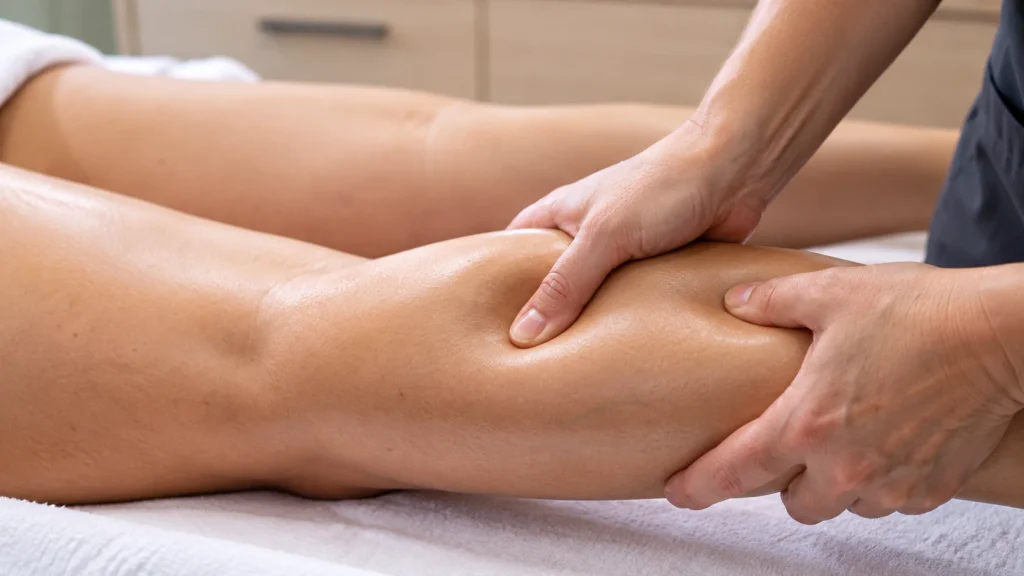
In a session, the therapist uses their hands to apply slow, steady pressure, usually directly on the skin without oils or lotions, and may hold it while checking in on your comfort. Many people describe the sensation as firm or tender, but it should not feel unbearable.
Mayo Clinic notes that massage in general may ease pain and muscle stiffness and support relaxation. Some people report less discomfort and easier movement, though results vary. Cleveland Clinic notes that research on the benefits of myofascial release is limited.
3 Ways Massage May Help Muscle Tension
Eases Specific Tight Spots
Slow pressure on a tender area may help a persistent spot feel less tight. Because the contact is steady and focused, it differs from broad massage strokes that cover a larger area.
Supports Easier Movement
Cleveland Clinic lists improved range of motion among the possible benefits. Some people notice that turning their head or reaching overhead feels more comfortable afterward.
Encourages Relaxation
Cleveland Clinic also lists relaxation and stress management as possible benefits. Lying still while someone else does the work gives you time to slow your breathing, and some people find that their shoulders and neck gradually soften.
What to Expect From a Myofascial Release Session
Your therapist will ask where you feel tight and which movements bother you. You can explain comfortable pressure and speak up at any time. Afterward, you may feel relaxed, loose, or mildly tender.
Cleveland Clinic says soreness should fade fairly quickly. Between visits, it advises asking your healthcare provider before trying any self-treatment at home.
When to Check First
Massage is not appropriate for every health condition, and massage therapists do not diagnose conditions or provide medical clearance. Talk with your healthcare provider before trying myofascial release if you have:
- A blood clot, deep vein thrombosis, or a condition that needs blood thinners
- A recent fracture, a burn, or an open wound
- A medical condition, such as diabetes, that affects healing or sensation
- Any other condition that could make massage unsafe
New numbness, weakness, or unexplained pain should also be medically evaluated. Cleveland Clinic lists several of these conditions and notes that rare complications can include internal bleeding and nerve damage. Pregnancy does not automatically rule out massage, though Mayo Clinic says safety can depend on your health history, so talk with your pregnancy provider first.
Complementary Services
Massage and acupuncture offer different ways to help manage muscle tension. Massage uses hands-on techniques to ease tightness, while acupuncture is another option some people choose for aches and stiffness.
Some people use both as part of a wellness routine, though neither replaces medical care when an underlying condition needs treatment. You can learn more about massage therapy and acupuncture at PalmLeaf Massage & Wellness in Buffalo Grove, IL.
Conclusion
Myofascial release may help ease muscle tension and make movement more comfortable. It won't solve every cause of pain, but some people find it a useful part of their care.
Before your next visit, notice which movements or times of day bring the tightness on, and tell your therapist. That small detail helps them focus on the spots that matter most to you.
FAQs
How long is a session?
Cleveland Clinic lists 15 to 50 minutes for myofascial release. Your therapist can confirm how long your visit will run.
Should it hurt?
Pressure can feel firm or tender, but it should not feel unbearable. Ask your therapist to ease up if it becomes too strong.
How is it different from regular massage?
Regular massage can use broad strokes over a larger area. Myofascial release focuses on stiff spots with slow, steady contact.
Who can provide myofascial release?
Cleveland Clinic lists physical therapists, massage therapists, and osteopathic physicians, among others. Ask about training and credentials before booking.
Can I do myofascial release at home?
Some people use a foam roller at home, but Cleveland Clinic advises asking your healthcare provider before trying any self-treatment.
Sources
Myofascial Release Therapy
Cleveland Clinic
Massage Therapy
Mayo Clinic
Massage Therapy: What You Need To Know
National Center for Complementary and Integrative Health
This article is for informational purposes only and is not a substitute for professional medical advice, diagnosis, or treatment. Consult a qualified healthcare provider about your health or medical condition.