
Fire cupping looks dramatic, with a flame, glass cups, and circular marks that can linger for a week or two. If you are curious about a first session, it helps to understand what actually happens.
Here is how it works, where massage fits into the picture, and when to check with a doctor first.
Quick Answer
Does Fire Cupping Hurt?
Fire cupping should not cause pain, though many people notice a tight pulling sensation on the skin. Mild soreness afterward is possible, but severe discomfort is a reason to stop the session and speak up.
How Fire Cupping Works
What a Fire Cupping Treatment Is
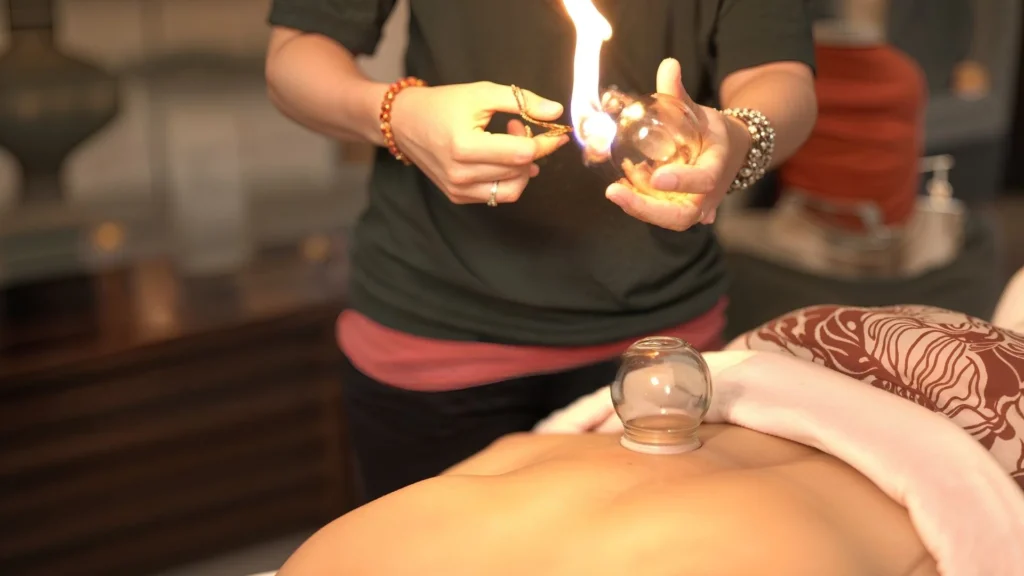
Fire cupping uses heat to create suction inside a glass cup. The practitioner briefly places a flame inside the cup, removes it, and then puts the cup on the skin. As the air cools, suction pulls the skin upward.
Because the skin is not pierced, fire cupping is considered a type of dry cupping, while wet cupping pierces the skin and lets blood flow into the cup. Cleveland Clinic lists burns from heated cups among the documented risks, which is why careful handling and experienced technique are important.
How Massage May Help
Cupping is sometimes used alongside massage therapy, and while massage uses hands-on pressure to ease tight muscles, cupping uses suction to lift the skin and tissue.
The American Massage Therapy Association (AMTA) describes the sensation as anywhere from light to intense, so tell your practitioner immediately if the suction feels stronger than you find comfortable.
What People May Like About Fire Cupping
Some people report less pain or muscle tightness after cupping. But research is still limited, and most studies have been low quality. Results vary, so cupping should not be seen as a proven treatment for any particular condition.
Eases Muscle Tightness
Cleveland Clinic notes that many people who try cupping report less muscle tightness and slightly improved range of motion afterward, although individual experiences differ considerably.
Offers a Calming Experience
Some people find it relaxing to lie quietly while the cups rest on their skin, though others may find the pulling sensation uncomfortable. Everyone’s experience is different.
Can Be Adjusted to You
Your practitioner can change where the cups go and how long they stay in place, and if the pulling feels too strong, you can ask them to adjust or remove a cup.
What to Expect From a Fire Cupping Session
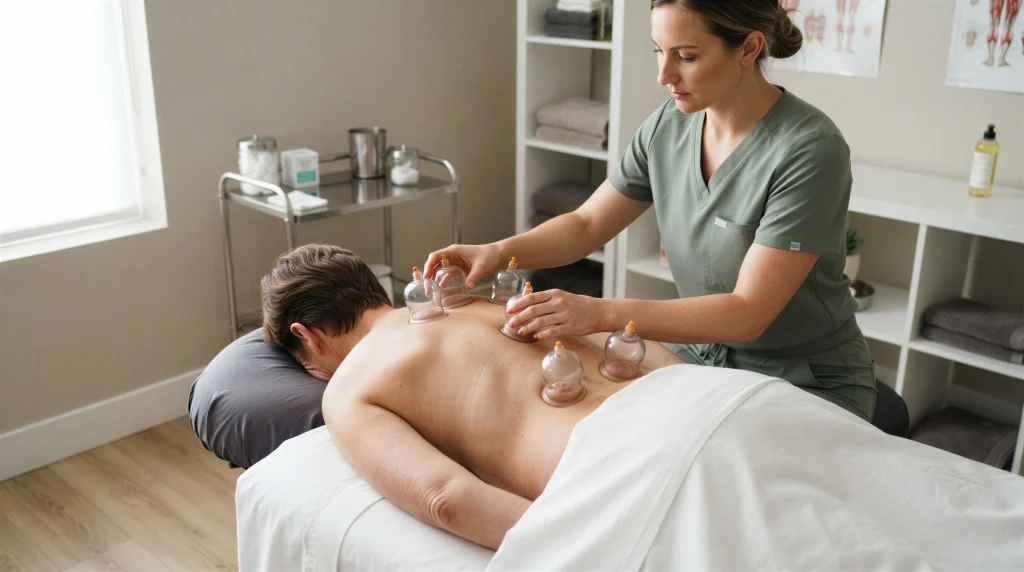
Your practitioner will ask what you hope to address and where you feel tight. You can explain what level of suction feels comfortable and speak up at any time.
You may lie face down or sit while the practitioner briefly heats each cup and places it on your skin. The flame is removed before the cup touches you. Some practitioners leave the cups in place, while others use oil to glide them across your skin.
Afterward, you may feel relaxed, loose, or mildly tender.
Cupping leaves round marks where each cup sat, and Cleveland Clinic says they should fade within a week or two. NCCIH notes that these marks can be mistaken for signs of physical abuse, so it helps to mention that you had cupping done to any health care provider you see afterward.
When to Check First
Fire cupping is not right for everyone. If you have a medical condition, take blood thinners, or are unsure whether cupping is safe for you, check with your healthcare provider first. Common reasons for additional caution include:
- You are pregnant
- You have a bleeding disorder or anemia, or you take anticoagulant medication
- You have a history of blood clots or stroke
- You have cardiovascular disease or a pacemaker
- You have eczema, psoriasis, or epilepsy
- Your skin is broken, inflamed, or infected
Also contact a healthcare provider if you develop a fever, signs of skin infection such as spreading redness, warmth, or discharge, or any pain that feels sharp or severe.
Cleveland Clinic and AMTA identify many of these as reasons for caution, and Cleveland Clinic advises against cupping during pregnancy because so little is known about its effects. NCCIH adds that cupping may worsen eczema or psoriasis, and massage therapists do not diagnose medical conditions or provide medical clearance.
Complementary Services
Massage and acupuncture are two other options for people dealing with tight or sore muscles. Massage uses hands-on techniques, while acupuncture uses thin needles placed at specific points on the body.
Some people choose to use both as part of an overall wellness routine, though neither replaces medical care when an underlying condition needs treatment. At PalmLeaf Massage & Wellness in Buffalo Grove, IL, you can learn more about massage therapy and acupuncture.
Conclusion
Fire cupping may be worth exploring if you’re curious about a different approach to muscle tightness. Expect a pulling feeling during treatment and round marks that usually fade within a week or two.
Before booking, ask about the practitioner’s training, how the cups are cleaned, and whether the treatment is appropriate for you.
FAQs
Is fire cupping painful?
Fire cupping should not hurt, but you may feel a tight pulling sensation as the cups create suction. If anything feels painful, tell your practitioner right away.
How long do fire cupping marks last?
The circular marks usually fade within one to two weeks. How long they last depends on your skin and the intensity of the suction.
Can fire cupping cause burns?
Yes. Fire cupping uses heat to create suction, so burns are a possible risk. The flame should be removed before the cup touches your skin.
Can I combine fire cupping with massage?
Yes. Some practitioners use cupping alongside massage to address muscle tightness. Ask whether combining the two approaches is appropriate for your needs.
Who should avoid fire cupping?
People who are pregnant, take blood thinners, have certain medical conditions, or have irritated or broken skin should check with a healthcare provider first. Cupping is not appropriate for everyone.
Sources
Cupping Therapy
Cleveland Clinic
Cupping
National Center for Complementary and Integrative Health
What is Cupping?
American Massage Therapy Association