
Swedish vs deep tissue massage can feel like a tough choice when your shoulders are tight. Knowing how each style feels can help you decide what to ask for at your next visit.
Here’s how they differ, what to expect during a session, and when to check with a doctor first.
Quick Answer
Which massage should I book?
Swedish massage may suit you if you want to relax or ease general tension. Deep tissue may be a better fit if one area keeps feeling tight and needs focused attention.
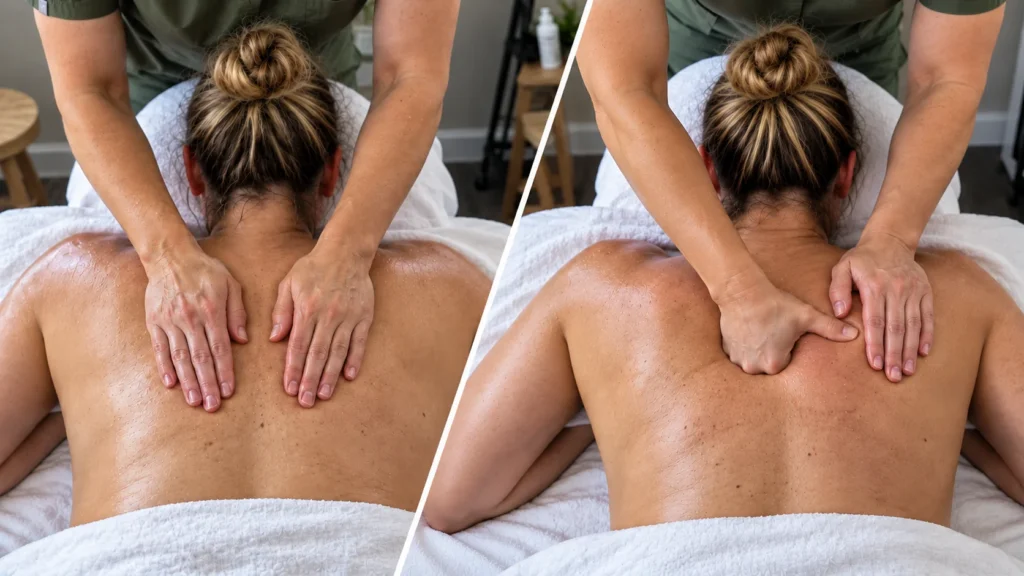
How Swedish vs Deep Tissue Massage May Help
What a Swedish or Deep Tissue Session Is
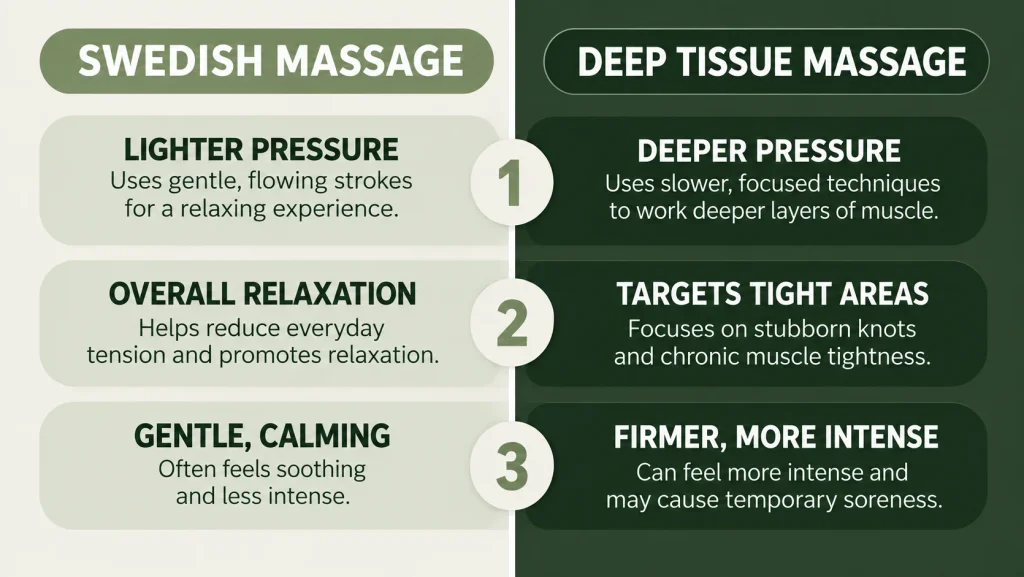
Swedish massage typically uses smooth, flowing strokes and gentle pressure. Cleveland Clinic describes it as a common choice for relaxation and for people who are new to massage. A session often covers several areas of the body.
Deep tissue massage uses slower, more focused work on deeper layers of muscle. A therapist may spend more time on one area, such as an upper back that feels tight after long hours at a desk. Your therapist can adjust the pressure as they work, especially if one area feels more sensitive than the surrounding muscles.
How Massage May Help
Mayo Clinic describes massage as an option people consider for stress, muscle tension, and discomfort. Some people feel calmer or looser afterward, and the experience can vary with the technique and the area receiving attention.
At PalmLeaf, therapeutic massage is the broader service, which can include Swedish or deep tissue techniques depending on your goals and comfort. If you’re looking at the service menu, that’s where to start.
3 Ways Massage May Help With Tension
Unwind After a Busy Week
If your whole body feels tense after a demanding week, Swedish massage may be a comfortable starting point. The steady rhythm and broad coverage can be especially comfortable when your main goal is relaxation after several days of feeling tense.
Focus on Recurring Tightness
If the same shoulder or spot in your upper back feels tight after work, deep tissue may be worth discussing. Describing the activity that brings on the tightness gives your therapist a practical starting point for deciding where to spend time and how to adjust the technique.
Ease Tension With Adjustable Pressure
Some areas can feel more sensitive than others, even within the same session. Let your therapist know if firmer pressure feels comfortable across your upper back but you prefer a lighter touch around your neck. They can adjust the technique during the session.
What to Expect From a Massage Session
Your therapist will ask about your goals, current concerns, and any injuries. You can describe what pressure feels comfortable and speak up at any time. Afterward, you may feel relaxed, loose, or mildly tender.
For either style, you can undress to your comfort level. A sheet covers you during the session, with the therapist uncovering the area they’re working on. If you’d prefer to skip a sensitive area, mention it during the consultation or at any point during the session.
Cleveland Clinic notes that focused, deeper work may leave some people feeling more tender afterward. Notice whether that tenderness improves as you return to your usual activities, and contact a healthcare provider if the pain is severe, worsening, or persistent.
When to Check First
Mayo Clinic recommends talking with your healthcare team before booking if any of these apply to you:
You take blood thinners, have a bleeding disorder, or recently had a blood clot or heart attack.
You have severe osteoporosis, a broken bone, or a burn.
You’re pregnant or receiving cancer care and need guidance about what type of massage may be appropriate.
Tell your therapist about healing wounds or areas with nerve damage so they can avoid pressure there.
For new or unexplained pain, a medical provider can help you decide whether massage is appropriate. Diagnosis and medical clearance are questions for your healthcare provider. Share any guidance they give you with your massage therapist.
Complementary Services
Massage and acupuncture are different approaches some people consider for ongoing muscle discomfort. Massage uses hands-on work, while acupuncture offers another option you can discuss with a licensed provider.
Some people include both in their wellness routine, though neither replaces medical care when an underlying condition needs treatment.
Conclusion
Swedish massage may suit a visit focused on general relaxation. Deep tissue may suit a visit where you want more attention on a recurring tight spot.
Afterward, jot down how the pressure felt and whether your usual activities felt more comfortable the next day. Those details give you something concrete to share at your next visit.
FAQs
Is Swedish massage good for beginners?
It can be a comfortable first choice if you’re new to massage and prefer a gentler, full-body session.
Does deep tissue massage hurt?
It can feel intense in places. Ask for lighter pressure or a pause if you feel sharp pain or start bracing against the pressure.
Is soreness common after deep tissue?
Some people notice mild tenderness the next day, especially after firmer work. Others feel little or no soreness.
Can I get deep tissue massage on blood thinners?
Talk with your healthcare provider before booking. Blood thinners can make vigorous massage a poor fit for some people.
Can I combine both styles in one session?
Often, yes. A therapist can use flowing strokes across several areas and spend part of the session on one spot.
Sources
Massage Therapy
Mayo Clinic
Types of Massage Therapy to Try
Cleveland Clinic
How To Relieve Muscle Soreness After a Massage
Cleveland Clinic
This article is for informational purposes only and is not a substitute for professional medical advice, diagnosis, or treatment. Consult a qualified healthcare provider about your health or medical condition.